







Research laboratory project of a multinational pharmaceutical company
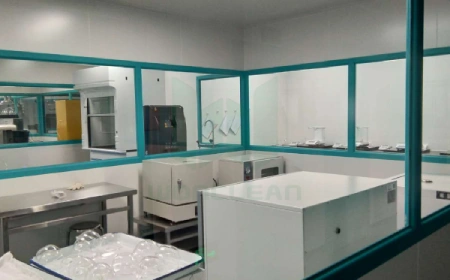
A comprehensive case study detailing the design and implementation of an ISO 5 cleanroom for injectable drugs, focusing on GMP compliance, HEPA filtration, and strict environmental monitoring protocols established in 2025.
1. Project Overview
A leading multinational pharmaceutical company embarked on a strategic initiative to establish a state-of-the-art research laboratory in [Location – e.g., Singapore, Boston, or Shanghai]. The facility was designed to support early-stage drug discovery, formulation development, and potency analysis for novel oncology and gene therapy products.
To meet stringent regulatory requirements (EU GMP, FDA cGMP, and ISO 14644), the company required a fully integrated cleanroom equipment solution capable of achieving ISO Class 5 to ISO Class 7 environments, with specialized containment for highly potent active pharmaceutical ingredients (HPAPIs).
2. Client Requirements
-
Strict Contamination Control: Prevention of cross-contamination between different research modules (e.g., cell culture, virology, and chemical synthesis).
-
High Containment: Negative pressure suites with HEPA/ULPA filtration and pass-through systems for handling OEB Level 4 and 5 compounds.
-
Precision Environmental Control: Temperature stability at , relative humidity , and room pressure cascade from clean to dirty corridors.
-
Modular Scalability: Ability to expand or reconfigure lab modules without major renovation.
-
Data Integrity & Monitoring: Continuous monitoring of particle counts, differential pressure, and airflow velocity.
3. Cleanroom Equipment Engineering Solution
Our engineering team delivered a turnkey cleanroom equipment package comprising:
A. HVAC and Filtration Systems
-
AHUs with Energy Recovery: Redundant air handling units with VFD-controlled fans.
-
HEPA Filter Ceiling Modules: Terminal HEPA filters (99.997% @ 0.3 µm) with leak-tested housings.
-
Unidirectional Airflow Units (UDAFs): Installed over biosafety cabinets and filling stations to maintain ISO Class 5 zones.
B. Modular Cleanroom Architecture
-
Hardwall Modular Panels: Non-porous, chemical-resistant polyurethane or mineral core panels with rounded cove corners for easy cleaning.
-
Interlocking Air-Tight Doors: With magnetic gaskets and vision panels.
-
Pass-Through Chambers: Interlocked, HEPA-filtered pass-boxes for safe material transfer.
C. Containment and Safety Equipment
-
Biosafety Cabinets (BSC Class II Type B2): 100% exhaust units connected to dedicated containment ducts.
-
Powder Containment Hoods: Downflow booths (DFB) for weighing and dispensing HPAPIs.
-
Bag-In/Bag-Out (BIBO) Filter Housings: For safe filter replacement without operator exposure.
D. Monitoring and Control System (BMS/EMS)
-
Real-time sensors for particle count, differential pressure, temp/RH.
-
Alarm and alert integration with the client’s central SCADA system.
-
Data logging compliant with 21 CFR Part 11.
4. Key Engineering Challenges & Solutions
| Challenge | Solution |
|---|---|
| Achieving ≤ 0.1 Pa pressure cascade between 20 rooms | Motorized dampers with closed-loop PID control |
| Minimizing vibration near sensitive analytical balances | Isolated equipment platforms and anti-vibration mounts |
| Maintaining cleanliness during phased construction | Portable mini-environment units and strict gowning protocols for installers |
| Validating airflow patterns | Smoke studies and computational fluid dynamics (CFD) simulations pre-installation |
5. Validation & Compliance
All cleanroom equipment was installed and qualified according to V-model approach:
-
DQ (Design Qualification): Verified ISO class, material compatibility, and airflow simulations.
-
IQ (Installation Qualification): Verified utility connections, filter integrity, and component certification.
-
OQ (Operational Qualification): Tested airflow velocity, pressure cascade, particle counts (non-viable), and alarm functionality.
-
PQ (Performance Qualification): Dynamic testing under simulated operational conditions, including aseptic media fills.
Result: The facility passed regulatory inspection with zero major observations, and achieved ISO 14644-1 Class 5 (at rest/in operation) for critical zones.
6. Project Outcome
-
Completion Time: 14 months (on schedule)
-
Cleanroom Area: 2,800 m² (including 12 modular labs and 4 support zones)
-
Energy Efficiency: 28% reduction in HVAC energy consumption compared to conventional designs
-
Operational Readiness: Successful commissioning of 8 HPAPI containment suites
The client now operates a flexible, safe, and compliant research laboratory, accelerating its oncology pipeline with minimized cross-contamination risk.
7. Conclusion
This case study demonstrates that for multinational pharmaceutical R&D projects, engineered cleanroom equipment—not just construction—is the cornerstone of regulatory compliance and operational excellence. By integrating modular hardwall systems, precision HVAC, and real-time monitoring, the project met all scientific, safety, and scalability requirements.