







A large scientific research institute
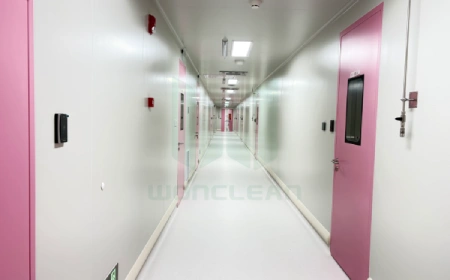
Cleanroom Equipment Engineering for Multi-User, Multi-Disciplinary Research Environments
1. Project Overview
A large scientific research institute—comprising multiple departments such as molecular biology, nanotechnology, advanced materials, and pharmaceutical sciences—initiated a major infrastructure upgrade to centralize its high‑containment and high‑sensitivity research capabilities. The institute required a flexible, scalable cleanroom facility capable of supporting diverse research activities ranging from cell culture and viral vector production to nanofabrication and analytical chemistry.
Unlike a single‑owner pharmaceutical company, the institute hosts dozens of independent research groups, each with varying cleanliness, safety, and equipment requirements. The primary challenge was to design a shared cleanroom equipment ecosystem that could serve multiple users without cross‑interference, while maintaining compliance with institutional biosafety levels (BSL‑2 and BSL‑3) and ISO 14644 standards.
2. Client Requirements
-
Multi‑User Flexibility: Cleanroom zones that can be reconfigured for different research protocols (e.g., sterile cell work one week, nanoparticle synthesis the next).
-
Segregated Containment: Isolated modules for BSL‑2, BSL‑3, and low‑humidity nanofabrication processes, each with dedicated HVAC and airlock systems.
-
High Reliability & Uptime: 24/7/365 operation with redundant cleanroom equipment to avoid research downtime.
-
Energy Efficiency: Given the large footprint (3,500 m²), the institute demanded low‑energy cleanroom HVAC and filtration solutions.
-
Training & Accessibility: Equipment interfaces designed for easy operation by rotating students, postdocs, and visiting scientists.
3. Cleanroom Equipment Engineering Solution
Our engineering team delivered a centralized cleanroom equipment package tailored to a multi‑tenant research environment:
A. Zoned HVAC and Filtration
-
Dedicated AHU per cleanroom class: Separate air handling units for ISO Class 5, Class 6, and Class 7 zones.
-
HEPA/ULPA filter banks: Ceiling‑mounted filter modules with adjustable airflow for research‑grade unidirectional or non‑unidirectional patterns.
-
Low‑velocity displacement ventilation in low‑turbulence zones (e.g., for electron microscopy prep).
B. Modular Cleanroom Architecture
-
Demountable hardwall panels: Allow reconfiguration of lab layouts without structural modifications.
-
Color‑coded modular walls: Visual differentiation of cleanliness levels (e.g., white = ISO 7, blue = ISO 6, yellow = BSL‑3).
-
Interlocked pass‑through autoclaves and chemical dunk tanks: For safe material transfer between containment levels.
C. Shared Containment and Process Equipment
-
Multiple Class II Type A2 biosafety cabinets (BSCs): Each equipped with individual monitoring but connected to a common exhaust plenum.
-
Portable glovebox isolators: For oxygen/moisture‑sensitive materials research.
-
Centralized vacuum and gas systems: Ultra‑high purity nitrogen, argon, and clean dry air distributed via stainless steel manifolds.
D. Central Monitoring & Access Control
-
Room‑by‑room EMS/BMS: Real‑time pressure, particle count, temp, RH, and door interlock status.
-
RFID‑based access system: Restricts users to authorized cleanroom classes and records usage for billing/accountability.
-
Visual alarm beacons at each entry for rapid pressure‑cascade failure notification.
4. Key Engineering Challenges & Solutions
| Challenge | Solution |
|---|---|
| Preventing cross‑contamination between BSL‑2 and BSL‑3 zones | Physical separation + cascading negative pressure (−25 Pa to −50 Pa) + dedicated BIBO filter housings |
| Supporting high‑heat equipment (furnaces, reactors) inside cleanrooms | Local exhaust connections + water‑cooled equipment enclosures + supplementary chilled beams |
| User‑induced contamination (multiple researchers per day) | Mandatory gowning rooms with air showers + sticky mats at each entrance + routine ATP surface testing |
| Vibration from nearby foot traffic affecting sensitive tools | Isolated concrete inertia blocks for AFM, TEM, and microbalances |
5. Validation & Compliance
All cleanroom equipment was qualified to ISO 14644‑1:2015 and institutional biosafety requirements:
-
DQ: Simulated multi‑user scenarios (e.g., simultaneous cell culture and nanoparticle synthesis).
-
IQ: Verified utility connections, filter certifications, and equipment mounting.
-
OQ: Tested air change rates (20–60 ACH depending on class), pressure cascades, and recovery time (<15 min to ISO Class 5).
-
PQ: Three months of dynamic monitoring with actual research protocols, including microbial air sampling.
Outcome: The institute achieved full operational certification with zero cross‑contamination events during the validation period.
6. Project Outcome
-
Cleanroom Area: 3,500 m² (ISO 5: 400 m², ISO 6: 1,200 m², ISO 7: 1,900 m²)
-
User Capacity: Up to 150 researchers per day across 28 independent lab modules
-
Energy Savings: 32% reduction in HVAC energy via variable‑speed fans and demand‑controlled ventilation
-
Utilization Rate: >85% within six months of opening, accommodating 12 research groups from 4 faculties
The research institute now operates a truly shared, high‑performance cleanroom core facility, enabling cross‑disciplinary projects that were previously impossible due to contamination or containment conflicts.
7. Conclusion
For large scientific research institutes, cleanroom equipment engineering must prioritize flexibility, segregation, and user‑centric design far more than in a dedicated pharmaceutical facility. This project demonstrates that with zoned HVAC, modular hardwall architecture, and centralized monitoring, a single cleanroom complex can safely serve hundreds of researchers across BSL‑2, BSL‑3, and nanofabrication disciplines—while maintaining ISO Class 5 integrity and energy efficiency.