







Classification of Cleanroom Levels in GMP
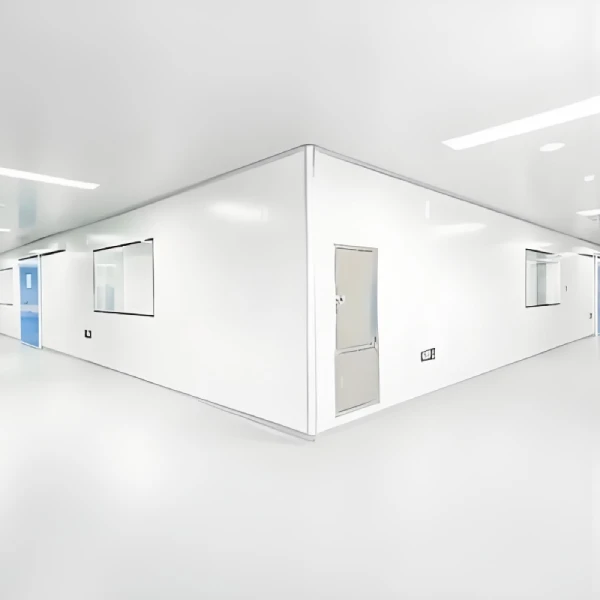
Cleanroom classifications in Good Manufacturing Practice (GMP) environments are critical for ensuring product integrity, personnel safety, and regulatory compliance—particularly in the Pharmaceutical Industry. These classifications—such as class 1 clean room, class 10 cleanroom, class 100 clean room, class 100 cleanroom, class 1000 clean room, class 1000 cleanroom, and class 10000 clean room—defin
Cleanroom classifications in Good Manufacturing Practice (GMP) environments are critical for ensuring product integrity, personnel safety, and regulatory compliance—particularly in the Pharmaceutical Industry. These classifications—such as class 1 clean room, class 10 cleanroom, class 100 clean room, class 100 cleanroom, class 1000 clean room, class 1000 cleanroom, and class 10000 clean room—define permissible particle counts per cubic foot of air and directly influence HVAC system design, airflow velocity, and pressure differentials. Achieving these stringent standards relies heavily on high-efficiency air filter systems, often incorporating HEPA or ULPA filtration, alongside precision-engineered architectural components like wall panels, fiberglass panels, soundproof wall panels, Steel doors, and double glass window panes. Equipment such as Laminar Flow Hood, Laminar Flow Cabinet, and specialized Laboratory equipment must be integrated with the cleanroom’s environmental controls to maintain unidirectional airflow and minimize turbulence. In sensitive applications—including sterile manufacturing, aseptic filling, and even advanced operating room configurations—these elements collectively ensure particulate and microbial control. The selection of materials and layout is not merely aesthetic; it directly impacts thermal stability, noise attenuation (soundproof panels), and long-term operational reliability. Ultimately, proper cleanroom classifications and robust infrastructure support consistent quality, reduce contamination risk, and uphold global GMP standards across commercial and industrial cleanrooms.
Figure 1: Typical Classification of Cleanroom Levels in GMP installation in a commercial building
Classification of Cleanroom Levels in GMP
Cleanroom classifications in Good Manufacturing Practice (GMP) define the maximum allowable concentration of airborne particles per cubic meter of air. These standards—such as class 1 clean room, class 10 cleanroom, class 100 clean room, class 100 cleanroom, class 1000 clean room, class 1000 cleanroom, and class 10000 clean room—are based on ISO 14644-1 and US FED STD 209E. Lower numbers indicate stricter particle control, with a class 1 clean room allowing only 1 particle ≥0.1 µm per cubic foot.
How It Works
GMP cleanrooms maintain controlled environments using precise airflow patterns (unidirectional or turbulent), pressure differentials, and continuous air recirculation. Air is drawn through an air filter system—typically pre-filters, HEPA, and sometimes ULPA filters—to remove contaminants before re-entry into the space.
Key Components
- Fans: Provide consistent airflow and static pressure across zones.
- Coils: Regulate temperature and humidity to prevent microbial growth.
- Air filter: Critical for particle removal; HEPA filters are standard in class 100 clean room and higher-grade spaces.
- Dampers: Adjust airflow volume and balance between rooms.
- Controls: Monitor and automate pressure, temperature, humidity, and particle counts in real time.
Main Applications
Cleanrooms serve diverse sectors: In the Pharmaceutical Industry, they support sterile manufacturing of injectables and APIs. Healthcare facilities use them in operating room suites and isolation units. Industrial applications include semiconductor fabrication and nanotechnology labs. Educational institutions deploy them for research and training. Commercial buildings may integrate modular cleanrooms for specialized testing or development labs.
Benefits and Advantages
GMP-compliant cleanrooms ensure product integrity, regulatory compliance, and personnel safety. Modular construction often includes wall panels, fiberglass panels, soundproof wall panels, and soundproof panels for thermal and acoustic control. Double glass window panes offer visibility without compromising integrity. Steel doors enhance durability and sealing. Critical equipment like Laminar Flow Hood and Laminar Flow Cabinet provide localized ISO 5 environments. All these elements support reliable operation of sensitive Laboratory equipment. Ultimately, proper classification and design reduce contamination risk, increase batch yield, and uphold global quality standards.

Figure 2: Class 10 cleanroom showing internal components and airflow paths
Classification of Cleanroom Levels in GMP
Technical Specifications Table
| Parameter | Value / Specification |
|---|---|
| Airflow Capacity | 15–25 ACH (class 1000 clean room), 60–120 ACH (class 100 clean room), >240 ACH (class 10 cleanroom) |
| Cooling Capacity | 1.5–3.0 kW/ton (varies with load and classification) |
| Heating Capacity | 0.8–2.2 kW (for temperature stabilization in class 1 clean room and class 10 cleanroom) |
| class 1000 clean room | Max 1,000 particles ≥0.5 µm per ft³; typical for packaging areas in Pharmaceutical Industry |
| Filter Efficiency | HEPA: ≥99.97% @ 0.3 µm; ULPA: ≥99.999% @ 0.12 µm (air filter critical for all cleanroom classifications) |
| Fan Power | 0.3–1.2 kW (scales with airflow and static pressure) |
| Noise Level | ≤55 dB(A) — achieved using soundproof panels and soundproof wall panels |
| Energy Efficiency | SEER ≥14; optimized via VFDs and heat recovery in HVAC systems |
Dimensions and Sizing Considerations
Room height typically ranges from 2.4 m to 3.0 m to accommodate ductwork and Laminar Flow Hood or Laminar Flow Cabinet. Floor area is determined by workflow, equipment footprint (Laboratory equipment, operating room tools), and personnel count. Structural elements like wall panels, fiberglass panels, Steel doors, and double glass window panes must meet ISO 14644-1 and EU GMP Annex 1. Ceiling void depth affects filter bank placement and airflow uniformity.
Selection Criteria
Choose based on required cleanrooms classification (e.g., class 100 clean room, class 1000 cleanroom, class 10000 clean room), process sensitivity, regulatory compliance (FDA, WHO, EU GMP), and operational lifecycle cost. Prioritize validated HEPA/ULPA filtration, seamless wall panels, and low-particulate materials. Integration with HVAC, lighting, and monitoring systems must support continuous environmental control—especially in sterile manufacturing zones.
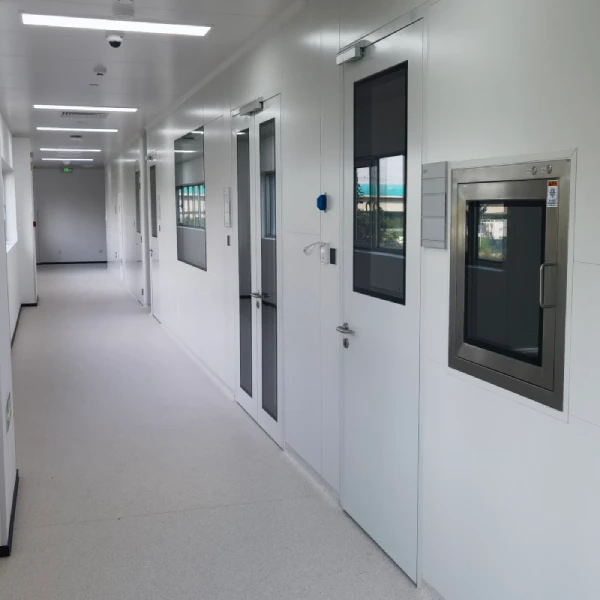
Figure 3: Detailed Class 100 cleanroom with labeled components
Frequently Asked Questions
What is the difference between GMP cleanroom air handlers and standard HVAC systems?
GMP cleanroom air handlers differ significantly from standard HVAC units by incorporating high-efficiency air filter systems—often HEPA or ULPA—designed to achieve stringent particulate control. Unlike conventional systems, they maintain precise positive pressure, strict temperature/humidity setpoints, and unidirectional airflow (laminar or turbulent) per cleanroom classifications. They also feature redundant fans, real-time particle monitoring, and leak-tested ductwork. Standard air handlers lack these controls and cannot sustain the ISO-defined environments required for pharmaceutical manufacturing or sterile compounding.
How much does a class 10 cleanroom cost, and what drives pricing?
A class 10 cleanroom (ISO 4) typically starts at $250–$450 per square foot, depending on size, configuration, and integration requirements. Key cost factors include ULPA filtration upgrades, stainless-steel construction, seamless wall panels, integrated Laminar Flow Hood or Laminar Flow Cabinet systems, and compliance-grade monitoring. Additional expenses arise from specialized double glass window panes, Steel doors, soundproof wall panels, and validation documentation. Costs escalate further when retrofitting existing spaces in the Pharmaceutical Industry, where regulatory audits demand traceable materials like non-shedding fiberglass panels.
Where can I find a technical diagram for a class 100 clean room?
Technical diagrams for a class 100 clean room (ISO 5) are available from certified cleanroom engineering firms and regulatory guidance documents such as ISO 14644-1 and EU GMP Annex 1. These schematics illustrate ceiling-mounted ULPA modules, perforated floor grids, airflow velocity maps (0.36–0.54 m/s), and pressure differentials across gowning areas, buffer zones, and the core operating room-equivalent space. Diagrams also specify placement of environmental sensors, interlocked access controls, and integration points for Laboratory equipment. Reputable suppliers provide annotated CAD drawings upon request, showing interface details for soundproof panels and utility penetrations.
What are typical dimensions for a class 1000 clean room?
A standard class 1000 clean room (ISO 6) used for aseptic filling or component preparation commonly measures 12 ft × 16 ft × 8 ft (L×W×H), though modular units range from 8 ft × 10 ft up to custom 40 ft × 60 ft configurations. Height must accommodate laminar flow plenums (minimum 12 ft ceiling), while layout follows GMP flow principles—separate entry/exit paths, anterooms, and segregated material transfer hatches. Dimensions directly impact airflow uniformity and filter coverage; undersized rooms risk turbulence, while oversized ones increase energy and maintenance costs for the same cleanrooms classification.
What maintenance is required for GMP-compliant class 1000 cleanroom systems?
Maintenance for a class 1000 cleanroom includes quarterly HEPA filter integrity testing (DOP/PAO scans), bi-weekly surface particle counts, monthly calibration of differential pressure gauges and humidity sensors, and annual full-system recommissioning. Critical tasks involve replacing pre-filters every 3–6 months, inspecting wall panels for seal integrity, verifying gasket condition on Steel doors, and cleaning double glass window panes with non-linting solvents. Preventive servicing of FFUs (fan filter units) and validation of Laminar Flow Hood velocity profiles ensure continued compliance with EU GMP and FDA expectations.
How do class 10000 clean room environments improve indoor air quality?
A class 10000 clean room (ISO 7) enhances indoor air quality by reducing airborne particles ≥0.5 µm to
© 2026 Classification of Cleanroom Levels in GMP Guide | Last updated: 2026/4/30