







The Application and Importance of FFU Clean Room|Fan filter unit
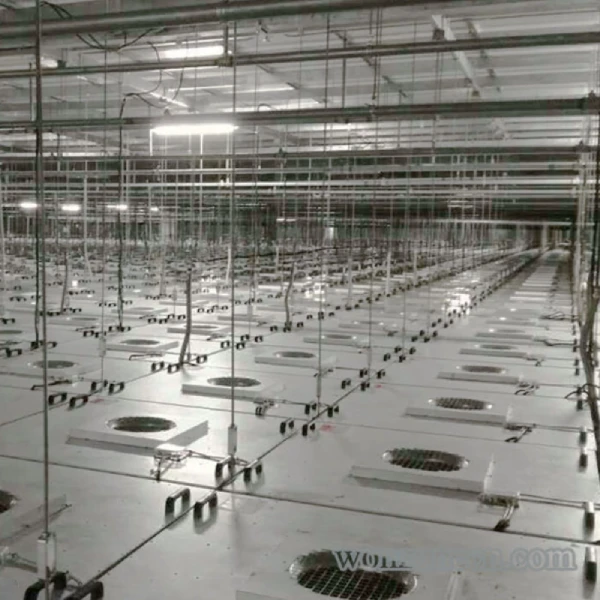
The Fan filter unit ceiling grid is a critical component in modern cleanroom HVAC systems, serving as the structural and functional backbone for delivering ultra-filtered, laminar airflow in controlled environments.
Overview
The Fan filter unit ceiling grid is a critical component in modern cleanroom HVAC systems, serving as the structural and functional backbone for delivering ultra-filtered, laminar airflow in controlled environments. Central to contamination-sensitive industries—including pharmaceuticals, biotechnology, semiconductor manufacturing, and healthcare—the Fan filter unit ceiling grid Design integrates high-efficiency particulate air (HEPA) or ultra-low penetration air (ULPA) filters with integrated fans to ensure consistent, uniform airflow across the entire cleanroom ceiling plane. A well-engineered Fan filter unit ceiling grid Factory ensures precision fabrication, modular compatibility, and compliance with ISO 14644-1 standards. The FFU ceiling, often implemented as an FFU Ceiling Grid, supports scalable deployment and seamless integration with suspended ceiling systems. As part of the broader FFU ceiling grid system, it enables flexible reconfiguration, simplified ffu installation, and optimized maintenance access. The FFU ceiling system frequently employs standardized FFU T grid configurations for structural rigidity and aesthetic consistency. For professionals evaluating solutions, understanding ffu clean room requirements, selecting appropriate ffu for clean room units, and assessing ffu price versus performance metrics are essential. Ultimately, the FFU ceiling grid Design directly impacts air quality, energy efficiency, operational uptime, and regulatory compliance—making it indispensable in mission-critical commercial and industrial applications.
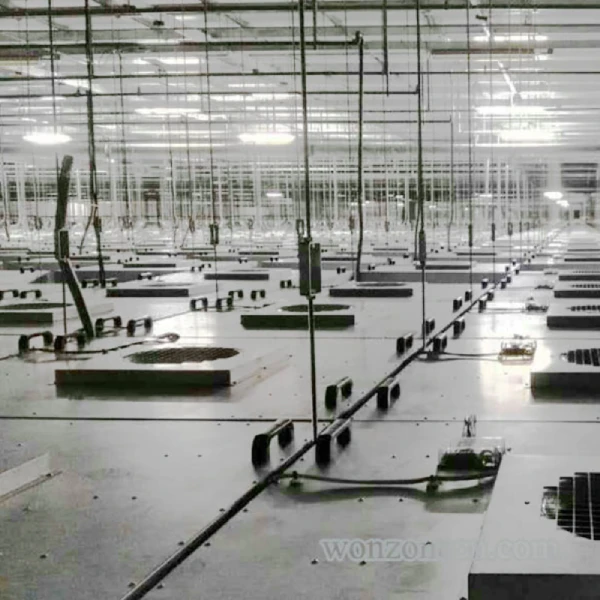
Figure 1: Typical The Application and Importance of FFU Clean Room|Fan filter unit installation in a commercial building
The Application and Importance of FFU Clean Room|Fan Filter Unit
What It Is and How It Works
A ffu clean room relies on a Fan filter unit ceiling grid to maintain precise air quality. A ffu for clean room is a self-contained module that integrates a fan, motor, and high-efficiency filter (typically HEPA or ULPA) to supply continuously purified, laminar airflow into controlled environments. Mounted within a suspended ceiling system, it draws ambient air, filters out particles down to 0.1–0.3 microns, and delivers clean air uniformly downward.
Key Components
- Fans and motors: Provide consistent airflow and static pressure; often EC (electronically commutated) for energy efficiency and speed control.
- Coils: Optional cooling/heating coils may be integrated in some advanced models for temperature and humidity regulation.
- Filters: HEPA or ULPA filters ensure ≥99.97% particle capture at 0.3 µm—critical for contamination-sensitive operations.
- Dampers: Allow fine-tuning of airflow volume per unit, supporting balanced distribution across the FFU ceiling grid system.
- Controls: Include variable frequency drives (VFDs), remote monitoring, and integration with building management systems (BMS) for real-time performance tracking.
Main Applications
The FFU ceiling system is widely deployed across sectors requiring strict environmental control:
- Healthcare: Operating rooms, pharmacies, and isolation units where airborne pathogens must be minimized.
- Industrial: Semiconductor fabrication, biotech labs, and pharmaceutical manufacturing—environments demanding ISO Class 3–8 cleanliness.
- Commercial buildings: Data centers and high-end laboratories benefit from modular scalability and low maintenance.
- Education: University clean labs and research facilities use FFUs for teaching and prototyping under controlled conditions.
Benefits and Advantages
Adopting a Fan filter unit ceiling grid Design offers flexibility, scalability, and cost-efficiency over traditional ducted HVAC. Its modular nature simplifies ffu installation, reduces construction time, and allows reconfiguration as needs evolve. Energy consumption is optimized via intelligent controls and EC fans. When sourced from a reputable Fan filter unit ceiling grid Factory or FFU ceiling grid Factory, units meet stringent certifications for reliability and performance. The FFU T grid compatibility ensures seamless integration with standard ceiling suspension systems. Moreover, competitive ffu price points—especially when procured in bulk from certified manufacturers—enhance ROI. Overall, the FFU ceiling grid Design and FFU ceiling grid system deliver unmatched air purity, operational agility, and long-term value in critical environments.
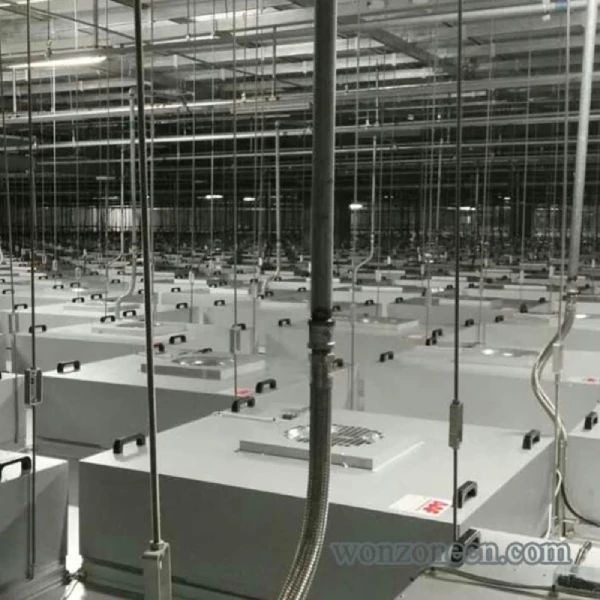
Figure 2: Fan filter unit ceiling grid Design showing internal components and airflow paths
The Application and Importance of FFU Clean Room|Fan filter unit
Fan filter units (FFUs) are critical components in modern cleanroom environments, providing laminar or turbulent airflow with high-efficiency particulate filtration. Their modular design enables flexible integration into cleanroom ceilings and supports strict ISO 1–ISO 9 classification requirements.
Technical Specifications
| Parameter | Typical Range |
|---|---|
| Airflow Capacity | 300–1,200 m³/h per unit |
| Cooling Capacity | 0–1.5 kW (optional integrated cooling) |
| Heating Capacity | 0–2.0 kW (optional integrated heating) |
| FFU ceiling grid | 600×600 mm, 600×1200 mm, or custom modular layouts |
| Filter Efficiency | HEPA H13–H14 (99.95–99.995% @ 0.3 µm); ULPA U15–U17 optional |
| Fan Power | 80–300 W (EC motor standard) |
| Noise Level | 45–58 dB(A) at 1 m |
| Energy Efficiency | ≥ 45% fan system efficiency (IEC 61584 compliant) |
Dimensions and Sizing Considerations
Standard Fan filter unit ceiling grid modules align with T-bar suspended ceiling systems. Common sizes include 600×600 mm and 600×1200 mm to match FFU T grid spacing. Ceiling height, room classification, and required air changes per hour (ACH) dictate unit density. For ISO 5 (Class 100), ≥ 60 ACH is typical—requiring full coverage or staggered FFU ceiling grid system layout. Structural load capacity and accessibility for maintenance must also be evaluated during ffu installation.
Selection Criteria
- Match ffu clean room ISO class with appropriate FFU ceiling grid Design and filter grade (HEPA/ULPA)
- Verify compatibility with existing FFU ceiling system and Fan filter unit ceiling grid Factory standards
- Evaluate ffu for clean room airflow uniformity, pressure drop, and redundancy needs
- Consider long-term ffu price vs. energy savings from EC fans and low-noise operation
- Ensure serviceability: access for filter replacement and fan maintenance within the FFU ceiling grid Factory environment

Figure 3: Detailed FFU ceiling with labeled components
Frequently Asked Questions
What is the difference between an FFU and a standard air handler?
An FFU (Fan filter unit) is a self-contained, modular device that combines a fan, motor, and high-efficiency filter (typically HEPA or ULPA) in a single housing, designed specifically for cleanroom environments. Unlike standard air handlers—which condition and circulate air across large HVAC systems—an FFU operates locally, delivering filtered, laminar airflow directly into the cleanroom space. FFUs are mounted in the ceiling grid and work in parallel to maintain precise ISO class air cleanliness. Their compact design, low noise, and plug-and-play operation make them ideal for modular cleanrooms. Standard air handlers lack integrated filtration at the point of delivery and cannot achieve the same level of localized particle control as an ffu clean room system.
What factors influence FFU price and Fan filter unit ceiling grid Design cost?
FFU price varies based on filter efficiency (HEPA vs. ULPA), airflow capacity (CFM), energy efficiency (EC motors), control options (VFD, smart monitoring), and certifications (ISO 14644, NSF). The Fan filter unit ceiling grid Design cost depends on layout complexity, ceiling height, structural integration, and whether it’s part of a new build or retrofit. Customized Fan filter unit ceiling grid configurations—especially those requiring reinforced support or specialized sealing—add to labor and material expenses. Bulk orders from an established Fan filter unit ceiling grid Factory often reduce per-unit costs through economies of scale and standardized production.
Are technical diagrams available for FFU ceiling installation?
Yes, manufacturers provide detailed technical diagrams for FFU ceiling integration—including cutaway views of the FFU ceiling grid system, mounting brackets, gasketing details, and electrical interconnections. These diagrams illustrate how individual units align within the FFU Ceiling Grid, interface with the FFU T grid, and integrate with lighting and fire suppression systems. Diagrams also show airflow patterns, pressure differentials, and recommended spacing to ensure uniform laminar flow. Proper use of these schematics ensures compliant ffu installation and avoids turbulence or dead zones in the cleanroom.
What are standard dimensions for FFU Ceiling Grid and FFU ceiling grid system?
Standard FFU Ceiling Grid modules commonly match common ceiling tile sizes: 600×600 mm (24×24 in), 600×1200 mm (24×48 in), and 300×1200 mm (12×48 in). The FFU ceiling grid system must accommodate unit depth (typically 300–450 mm) while allowing clearance for filter replacement and service access. Grid spacing follows FFU T grid standards—usually 15 mm or 24 mm wide aluminum or steel rails—to support load-bearing and alignment precision. Custom FFU ceiling grid Design may adjust dimensions for nonstandard rooms or hybrid HVAC integration, but compatibility with industry-standard FFU ceiling infrastructure remains essential.
How often does an FFU require maintenance?
Maintenance for an ffu for clean room includes quarterly visual inspections, biannual motor and bearing checks, and annual full performance validation (airflow, pressure drop, filter integrity). HEPA filters typically last 3–5 years depending on ambient particulate load; ULPA filters may require earlier replacement. Gaskets, seals, and the FFU ceiling grid frame should be inspected during each service cycle to prevent leaks. Scheduled filter changes and calibration ensure sustained compliance with ISO class requirements. A well-maintained FFU ceiling grid Factory-certified system minimizes downtime and extends equipment life.
How do FFUs improve indoor air quality in cleanrooms?
FFUs dramatically enhance indoor air quality by continuously recirculating air through high-efficiency filters—removing ≥99.99% of particles ≥0.3 µm (HEPA) or ≥0.12 µm (ULPA). This process maintains ultra-low airborne particulate counts, critical for pharmaceutical, semiconductor, and biomedical applications. Unlike conventional HVAC, the ffu clean room approach delivers uniform, downward laminar airflow