







Choosing rockwool sandwich panel for Aerospace: What Engineers Should Know
A quick guide to evaluating insulated fiberglass panels and sandwich panel wall system suppliers for Aerospace projects.
Choosing Rockwool Sandwich Panel Systems for Aerospace Cleanrooms
Fire safety codes for large aerospace assembly buildings are often stricter than in other manufacturing sectors, which pushes many facility engineers toward a rockwool sandwich panel core as the default choice for composite layup and paint bay cleanrooms. The mineral wool core provides fire performance that foam-based alternatives cannot match, an important consideration in buildings with significant flammable material handling nearby.
Thermal performance matters just as much in large-volume aerospace bays, where HVAC loads can be substantial. Specifying insulated fiberglass panels with verified thermal resistance values helps engineering teams size mechanical systems accurately rather than over-building capacity to compensate for uncertain panel performance.
Structural considerations differ from smaller cleanroom applications too. A sandwich panel wall system spanning the height of an aerospace assembly bay needs engineering review for wind and seismic loads that a standard cleanroom panel calculation might not fully address. Key evaluation points before finalizing a supplier:
- Verified fire rating appropriate for the facility's occupancy classification
- Structural engineering review for large-span panel applications
- Thermal performance data to support accurate HVAC sizing
- Reference installations in comparable aerospace assembly environments
Reinforcement and Finish Options for High-Traffic Assembly Areas
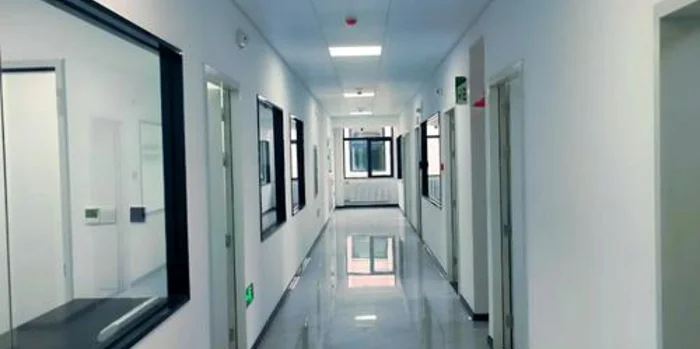
High-traffic assembly floors benefit from a fiberglass reinforced wall panel facing, which resists the impact damage that standard finishes accumulate from tool carts, material handling equipment, and foot traffic over the life of the facility.
Facilities configuring a dedicated sandwich panel room for composite curing or precision assembly should confirm panel outgassing performance, since resin off-gassing from nearby processes can interact with certain core materials over time.
For teams comparing options broadly, fiberglass wall panels remain a cost-effective choice for secondary support spaces, while rockwool-core systems are typically reserved for primary assembly areas where fire code compliance is non-negotiable.