






CONTACT US

High Efficiency Air Outlet
Overview:
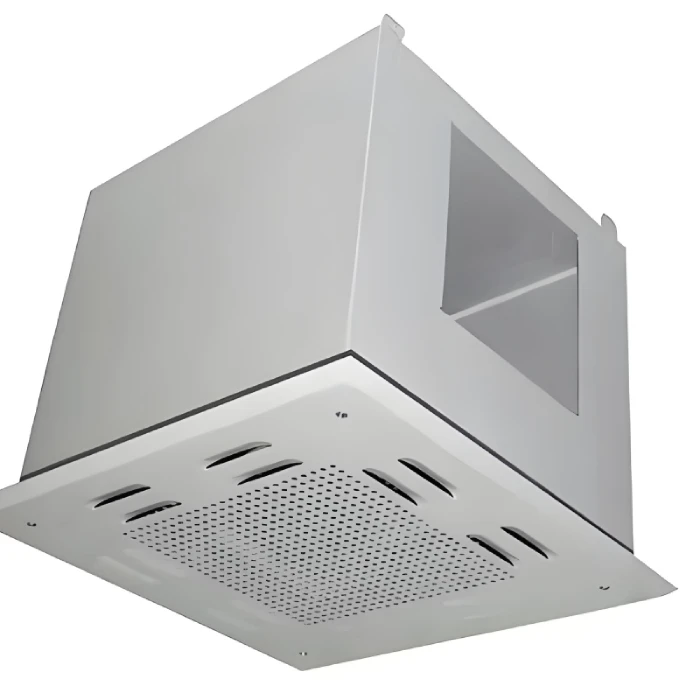
The High Efficiency Air Outlet, also known as HEPA Air Outlet, is a terminal air supply device in cleanroom HVAC purification systems. Installed on the cleanroom ceiling, it houses a high-efficiency filter and delivers treated clean air uniformly into the cleanroom. It is one of the key equipment components for maintaining cleanroom cleanliness levels.
Hot Tags:
DETAIL:
1. Product Overview
The High Efficiency Air Outlet, also known as HEPA Air Outlet, is a terminal air supply device in cleanroom HVAC purification systems. Installed on the cleanroom ceiling, it houses a high-efficiency filter and delivers treated clean air uniformly into the cleanroom. It is one of the key equipment components for maintaining cleanroom cleanliness levels.
High Efficiency Air Outlets are typically used in conjunction with duct systems and air handling units. They are suitable for cleanroom environments ranging from ISO Class 5 to ISO Class 8 and are widely used in pharmaceutical, biotechnology, electronics manufacturing, hospital, and food processing industries.
2. Working Principle
The working principle of the High Efficiency Air Outlet is based on a combination of centralized air supply and terminal filtration.
First, Air Source Supply. A central air handling unit or fan provides air that has passed through preliminary and medium-efficiency filters. This air is delivered to each High Efficiency Air Outlet through supply ducts.
Second, Terminal Filtration. Air enters the High Efficiency Air Outlet and passes through the built-in HEPA or ULPA filter, where airborne particles, bacteria, dust, and other contaminants are efficiently captured.
Third, Uniform Air Supply. The filtered clean air passes through the diffuser plate or airflow uniforming device at the outlet and is delivered into the cleanroom at a uniform velocity and direction, creating the required airflow pattern.
Fourth, Pressure Differential Maintenance. The High Efficiency Air Outlet works together with return air outlets to establish and maintain the required pressure differential gradient within the cleanroom, preventing contaminants from migrating from lower cleanliness areas to higher cleanliness areas.
3. Product Structure and Components
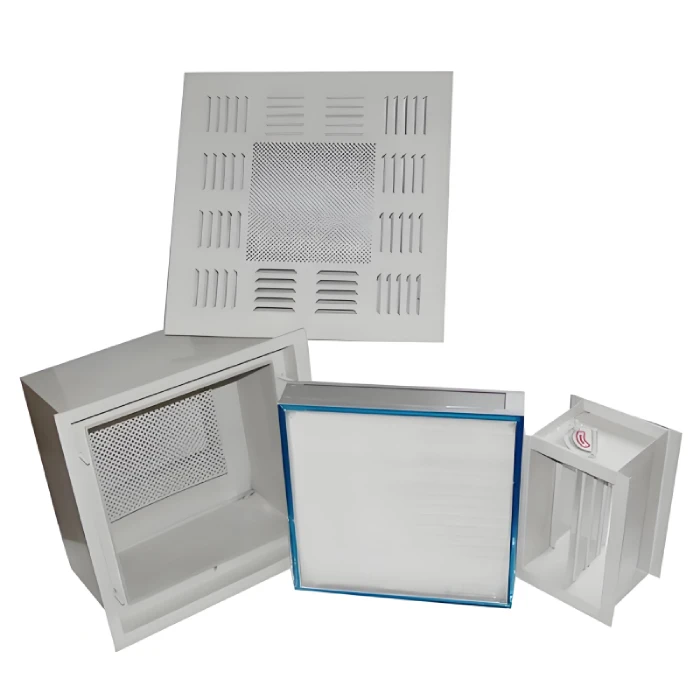
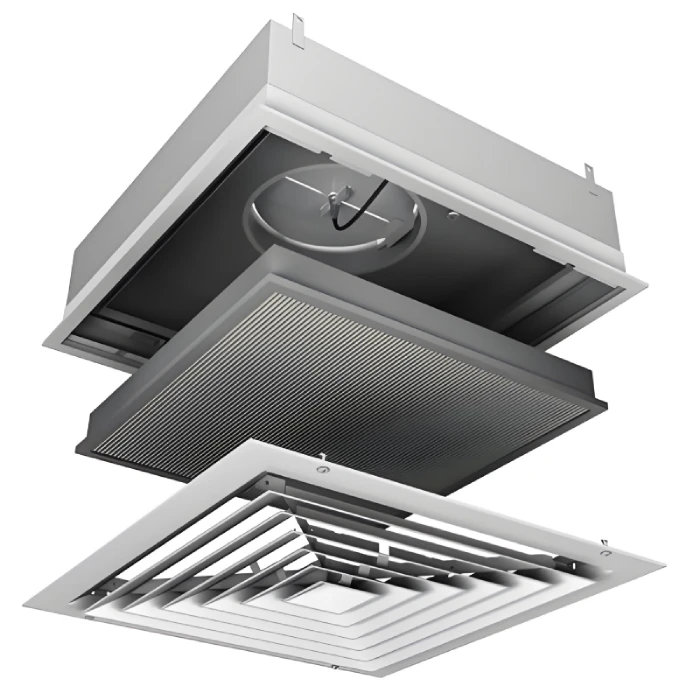
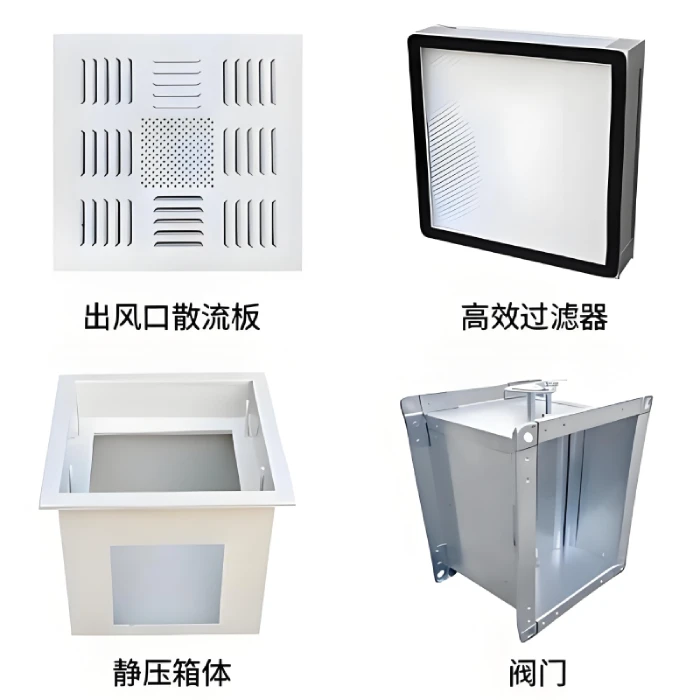
The High Efficiency Air Outlet consists of the following core components:
Housing: Manufactured from high-quality cold-rolled steel sheet or stainless steel sheet, with electrostatic spray or powder coating finish for good corrosion resistance and aesthetic appearance. The housing is designed to be airtight.
High Efficiency Filter: The core filtration component, including HEPA filters (99.97% or higher efficiency for 0.3 micron particles) and ULPA filters (99.999% or higher efficiency for 0.12 micron particles). Filters can be of the separated or mini-pleat type.
Diffuser Plate: Installed at the air outlet face, typically made of aluminum alloy or stainless steel, with uniformly distributed small holes or slots to ensure even distribution of supplied air.
Air Volume Control Damper: Installed at the air inlet end of the outlet, used to adjust the air volume delivered into the cleanroom, allowing adjustment of air change rates and pressure differential based on actual requirements.
Sealing Device: Includes sealing gaskets between the housing and the ceiling, and sealing strips between the filter and the housing, ensuring the system is airtight.
Pressure Differential Test Port: Used to connect a pressure gauge, facilitating monitoring of filter resistance changes to determine when filter replacement is needed.
Insulation Layer: Some models have an insulation layer on the exterior of the housing to prevent condensation during air conditioning operation.
4. Features and Advantages
First, High Filtration Efficiency. Built-in HEPA or ULPA filters efficiently remove microscopic airborne particles, ensuring supply air cleanliness meets cleanroom requirements.
Second, Uniform Air Distribution. Optimized diffuser plate design provides uniform and stable air supply, minimizing turbulence and dead zones, helping maintain cleanroom cleanliness.
Third, Compact Structure. The housing is compact, occupying minimal ceiling space, suitable for buildings with limited overhead space.
Fourth, Easy Installation. Standardized interface dimensions and installation methods allow direct connection to common duct systems, making installation quick and simple.
Fifth, Convenient Maintenance. Filters can be replaced from inside the cleanroom or from above the ceiling. Some models feature side-pull or bottom-pull designs for simple replacement.
Sixth, Adjustable Air Volume. Equipped with an air volume control damper, allowing flexible adjustment of supply air volume based on actual cleanroom requirements.
Seventh, Good Sealing Performance. Multiple sealing designs ensure system airtightness, preventing unfiltered air from leaking into the cleanroom through gaps.
Eighth, High Quality Materials. The housing is manufactured from high-quality steel with advanced surface treatment, offering corrosion resistance, easy cleaning, aesthetic appearance, and durability.
5. Technical Specifications (Standard)
Housing Material: Cold-rolled steel sheet or stainless steel sheet (304 or 316L)
Surface Finish: Electrostatic spray coating or powder coating
Standard Dimensions (Width × Height × Depth): Various standard sizes available, such as 600×600×500mm, 750×750×500mm, 900×600×500mm, and customizable
High Efficiency Filter Type: HEPA filter or ULPA filter
HEPA Filtration Efficiency: 99.97% or higher for 0.3 micron particles
ULPA Filtration Efficiency: 99.999% or higher for 0.12 micron particles
Rated Airflow: 500 to 3000 cubic meters per hour (varies by size and model)
Face Velocity: 0.45 to 1.5 meters per second (adjustable)
Diffuser Plate Material: Aluminum alloy or stainless steel
Air Volume Control Damper: Opposed blade multi-leaf damper or single-leaf damper
Sealing Method: Gasket seal or gel seal
Operating Temperature: 0 to 40 degrees Celsius
Operating Humidity: Less than 95% relative humidity
Installation Method: Recessed ceiling-mounted
6. Product Classification
By Filter Type: HEPA High Efficiency Air Outlet, equipped with HEPA filter, suitable for conventional cleanroom environments. ULPA High Efficiency Air Outlet, equipped with ULPA filter, suitable for higher cleanliness requirements above ISO Class 5.
By Material: Carbon Steel High Efficiency Air Outlet, housing made of cold-rolled steel with powder coating, economical and practical. Stainless Steel High Efficiency Air Outlet, housing made of 304 or 316L stainless steel, highly corrosion-resistant, suitable for humid or corrosive environments.
By Installation Method: Ceiling Supply Type, standard installation with air supplied downward from ceiling. Side Supply Type, wall-mounted, suitable for special airflow pattern requirements.
By Diffuser Type: Perforated Plate Diffuser, featuring uniformly distributed round holes for even air dispersion. Louvered Diffuser, featuring adjustable louvers for airflow direction control.
By Sealing Method: Gasket Seal Type, using sealing gasket between filter and housing, lower cost. Gel Seal Type, using gel seal technology for superior airtightness, suitable for applications with extremely high sealing requirements.
By Insulation: Non-Insulated Type, without insulation layer. Insulated Type, with insulation layer on housing exterior to prevent condensation.
7. Application Areas
High Efficiency Air Outlets are widely used in various locations with strict air cleanliness requirements.
Pharmaceutical Industry: Used in drug production workshops, sterile preparation workshops, API purification and packaging workshops, quality control laboratories, complying with GMP requirements. High Efficiency Air Outlets provide clean air to ensure air quality during pharmaceutical production meets specified standards.
Biotechnology and Life Sciences: Used in biological laboratories, cell culture rooms, genetic laboratories, microbiology testing rooms, etc., preventing airborne microorganisms and particles from contaminating experimental samples and cultures.
Semiconductor and Electronics Manufacturing: Used in chip fabrication workshops, wafer processing areas, LCD panel production workshops, precision electronic component assembly lines, etc., providing high-cleanliness air environments to prevent microscopic particles from causing defects in electronic components.
Hospitals and Medical Facilities: Used in operating rooms, ICU wards, sterile treatment rooms, central sterile supply departments, isolation wards, etc. High Efficiency Air Outlets provide clean air to reduce hospital infection risks and protect patients and medical staff.
Food and Beverage Processing: Used in food packaging workshops, dairy filling lines, beverage production workshops, meat processing workshops, etc., preventing airborne microorganisms from contaminating food products and extending product shelf life.
Precision Instruments and Optics Manufacturing: Used in lens assembly workshops, precision instrument calibration rooms, optical coating workshops, etc., providing dust-free environments to protect precision instruments and optical components from contamination.
Laboratories and R&D Centers: Used in chemical laboratories, physics laboratories, materials science laboratories, analytical testing centers, etc., protecting experimental samples and precision instruments from airborne particle interference.
Medical Device Manufacturing: Used in medical device production workshops, implant manufacturing workshops, single-use sterile device packaging workshops, etc., ensuring products are not contaminated by microorganisms during production.
Cosmetics Production: Used in cosmetics filling workshops, emulsifying workshops, packaging workshops, etc., preventing airborne microorganisms from contaminating cosmetics and ensuring product quality and safety.
Data Centers and Computer Rooms: Used in server rooms, telecommunications rooms, control centers, etc. High Efficiency Air Outlets help maintain the clean environment and temperature control required for equipment operation.
Animal Housing Facilities: Used in SPF animal rooms, laboratory animal centers, animal operating rooms, etc., preventing airborne pathogens from entering animal housing areas and protecting the health of laboratory animals.
Aerospace and Defense: Used in spacecraft assembly workshops, precision navigation equipment manufacturing workshops, weapons system maintenance workshops, and other applications with special cleanliness requirements.
8. Comparison with Other Cleanroom Equipment
High Efficiency Air Outlet vs. FFU: The High Efficiency Air Outlet does not contain an integrated fan and relies on a central HVAC system for air supply power. FFUs have a built-in fan and can operate independently. High Efficiency Air Outlets are suitable for new large-scale cleanroom projects with lower initial investment. FFUs are suitable for renovation projects and applications requiring independent airflow control.
High Efficiency Air Outlet vs. Fan Filter Box: Fan filter boxes typically include both fan and filter as a complete air supply unit. The High Efficiency Air Outlet is only a terminal device and requires an external fan for operation. High Efficiency Air Outlets have a simpler structure and lower maintenance costs.
High Efficiency Air Outlet vs. Standard Diffuser: Standard diffusers do not have filtration capability and only serve to distribute airflow. The High Efficiency Air Outlet provides both diffusion and high-efficiency filtration, making it a dedicated air supply device for cleanrooms.
9. Selection Guide
Cleanliness Requirement: Select the appropriate High Efficiency Air Outlet based on the required ISO cleanliness class. For ISO Class 5 and above, ULPA filters are recommended. For ISO Class 6 to Class 8, HEPA filters are suitable.
Airflow Requirement: Calculate the total supply air volume based on cleanroom area, height, and required air change rate. Determine the number of High Efficiency Air Outlets needed and the rated airflow per outlet.
Installation Space: Measure the ceiling plenum height and select a housing of appropriate height. For limited space, choose a low-profile High Efficiency Air Outlet.
Material Selection: For normal dry environments, carbon steel with powder coating is suitable. For humid environments or locations with corrosive gases, choose stainless steel housing.
Sealing Requirement: For applications with high airtightness requirements (such as biosafety laboratories, sterile pharmaceutical workshops), gel seal type High Efficiency Air Outlets are recommended.
Diffuser Type: For applications requiring high airflow uniformity, choose perforated plate diffusers. For applications requiring adjustable airflow direction, choose louvered diffusers.
Maintenance Convenience: Consider the workspace available for filter replacement and select a model that can be serviced from inside the cleanroom or from above the ceiling.
Compliance Requirements: The pharmaceutical industry should select High Efficiency Air Outlets that comply with GMP requirements, typically requiring material certificates and factory test reports.
10. Installation and Maintenance
Installation Key Points: Before installation, check that the ceiling opening dimensions match the air outlet. Install supply ducts in the ceiling plenum, ensuring good duct sealing. Insert the High Efficiency Air Outlet housing into the ceiling opening, using sealing gaskets to seal against the ceiling. Connect the supply duct to the air outlet inlet, using flanges and sealing gaskets to ensure leak-free connections. Install the high-efficiency filter, ensuring correct orientation and proper sealing. Install the diffuser plate. Connect pressure differential test tubing. Perform system commissioning to test air supply volume and pressure differential.
Filter Replacement Procedure: Turn off the HVAC system or close the corresponding air outlet damper. Remove the diffuser plate. Remove the old filter from the housing. Clean the filter mounting frame and sealing surfaces. Install the new filter, ensuring the sealing gasket is evenly compressed. Reinstall the diffuser plate. Restart the system and perform airflow velocity and pressure differential tests. Record the filter replacement date and pressure differential reading.
Daily Maintenance: Regularly observe the pressure gauge reading. When the pressure differential reaches twice the initial resistance, filter replacement is required. Regularly clean the diffuser plate surface to prevent dust accumulation from affecting airflow distribution. Check sealing points for air leakage. Periodically conduct airflow velocity tests to ensure supply air volume meets design requirements. Periodically conduct filter integrity tests (PAO leak testing) to verify no filter leakage.
Common Troubleshooting: If supply air volume is insufficient, check whether the air volume control damper is fully open, whether the filter is clogged, or whether the supply duct is leaking. If air supply is uneven, check whether the diffuser plate is clogged or improperly leveled. If pressure differential is too high, the filter is clogged and requires replacement. If condensation occurs on the housing, check whether the insulation layer is intact or whether the supply air temperature is too low.
FAQ
- 1 How do double glass window panes improve cleanroom performance in lithography areas?
- 2 What industries use FFUs?
- 3 What is a Fan Filter Unit (FFU)?
- 4 What is the function of a Clean Booth in facility design?
- 5 How do Air Shower Rooms manage personnel entry protocols?
- 6 What solutions exist for large cargo decontamination?
- 7 How is air distribution managed in cleanroom systems?
- 8 What defines the classification of a Clean Booth system?
- 9 How does an Air Shower Room enhance contamination control?
- 10 How to maintain airflow consistency in modular clean zones?
1
How do double glass window panes improve cleanroom performance in lithography areas?
Double glass window panes provide critical thermal, acoustic, and particulate isolation. The sealed argon or krypton fill minimizes convective currents at the viewport—preventing localized turbulence that could disturb laminar flow. Conductive coatings enable static dissipation, while laminated construction meets impact and fire-rating requirements. In practice, they reduce particle ingress through observation points by >90% versus single-pane alternatives and support stable differential pressures across ISO Class 3/4 boundaries.
2
What industries use FFUs?
Semiconductor production lines (particle-sensitive), biomedical research labs, pharmaceutical manufacturing, and any controlled environment requiring precise airflow, velocity, and noise level control.
3
What is a Fan Filter Unit (FFU)?
An FFU is a modular air purification device combining a fan with HEPA or ULPA filters in a single housing. It provides localized clean air supply and is fundamental to cleanroom contamination control.
4
What is the function of a Clean Booth in facility design?
A Clean Booth provides a localized clean environment within a larger room. It utilizes a cleanroom Fan Filter Unit(FFU) to maintain positive pressure and filter airborne particles. This type of cleanroom Local Clean Equipment is essential for processes requiring ISO Class 5 or better conditions without constructing a full cleanroom. Installation is flexible and cost-effective for specific workstations needing contamination control.
5
How do Air Shower Rooms manage personnel entry protocols?
Personnel entry requires strict decontamination. A cleanroom Single-Person Air Shower Room is designed for individual access, while a cleanroom Multi-Person Air Shower Room handles higher traffic volumes. The general cleanroom Air Shower Room uses high-velocity air to remove particles from clothing before entering critical zones. Proper interlocking systems ensure doors do not open simultaneously, maintaining pressure differentials and cleanliness standards effectively.
6
What solutions exist for large cargo decontamination?
Large items require specialized decontamination channels. A cleanroom Cargo Air Shower Room accommodates pallets and large equipment entering the facility. Continuous flow is managed via a cleanroom Goods Air Shower Tunnel for high-volume logistics. Smaller items pass through a cleanroom Aluminum Pass Box which offers durability and corrosion resistance. These systems prevent external contaminants from compromising the internal environment during material transport operations.
7
How is air distribution managed in cleanroom systems?
Air distribution determines cleanliness levels. The cleanroom Air Supply Device regulates volume and pressure within the space. Filtrated air is dispersed through a cleanroom High Efficiency Air Outlet to ensure uniform coverage without turbulence. Modular setups often utilize a cleanroom Clean Panel Clean Booth to integrate these components seamlessly. Proper design ensures consistent air changes per hour to meet regulatory compliance standards.
8
What defines the classification of a Clean Booth system?
Classification depends on air cleanliness levels. A Clean Booth provides localized ISO Class 5 environments. Integration with a cleanroom Fan Filter Unit(FFU) ensures consistent airflow. Regular maintenance of the cleanroom High Efficiency Air Outlet is crucial for sustaining particulate control standards within the workspace.
9
How does an Air Shower Room enhance contamination control?
Personnel entry requires strict decontamination. A cleanroom Single-Person Air Shower Room removes particles from suits before entry. For larger groups, a cleanroom Multi-Person Air Shower Room increases throughput efficiently. Cargo transport utilizes a cleanroom Cargo Air Shower Room to prevent external contaminants from entering critical production zones during material transfer.
10
How to maintain airflow consistency in modular clean zones?
Maintaining proper airflow is critical for contamination control. The cleanroom Fan Filter Unit(FFU) ensures uniform distribution across the workspace. Integration with a cleanroom Clean Booth provides a localized ISO Class 5 environment. Additionally, installing a cleanroom High Efficiency Air Outlet helps manage exhaust and pressure differentials effectively. Regular filter checks are necessary to sustain performance standards without compromising operational integrity.