







Semiconductor Breakthrough: The Cleanroom Scale Requirements for ASML's 2‑Nanometer Lithography Machine
At the 2-nanometer scale, even a single microscopic particle can cause a catastrophic failure in the lithography process. ASML’s machines require environments that surpass standard ISO Class 1 specifications.
ASML’s next-generation high-NA EUV lithography systems—designed for sub-2-nanometer node manufacturing—are redefining cleanroom performance expectations across the semiconductor supply chain. Unlike legacy tools, these machines demand unprecedented environmental control: ISO Class 1 (or better) particulate levels, sub-micron vibration isolation, ultra-stable temperature and humidity (±0.1°C / ±1% RH), and near-zero molecular contamination. Meeting these specs isn’t just about adding more HEPA filters—it requires holistic cleanroom design, precision construction, and intelligent component integration from day one. For fab planners, facility engineers, and procurement teams, this means reassessing every layer of infrastructure: from cleanroom construction contractors and prefab lab buildings, to cleanroom air shower validation, pass box cleanroom logistics, and Cleanroom ceiling systems Design. This article outlines the practical cleanroom scale requirements driven by ASML’s 2 nm platform—and how forward-thinking suppliers are delivering compliant, scalable, and future-ready solutions using portable walk in cleanrooms, prefab clean rooms, and integrated subsystems.
Key Cleanroom Challenges in Semiconductor Manufacturing
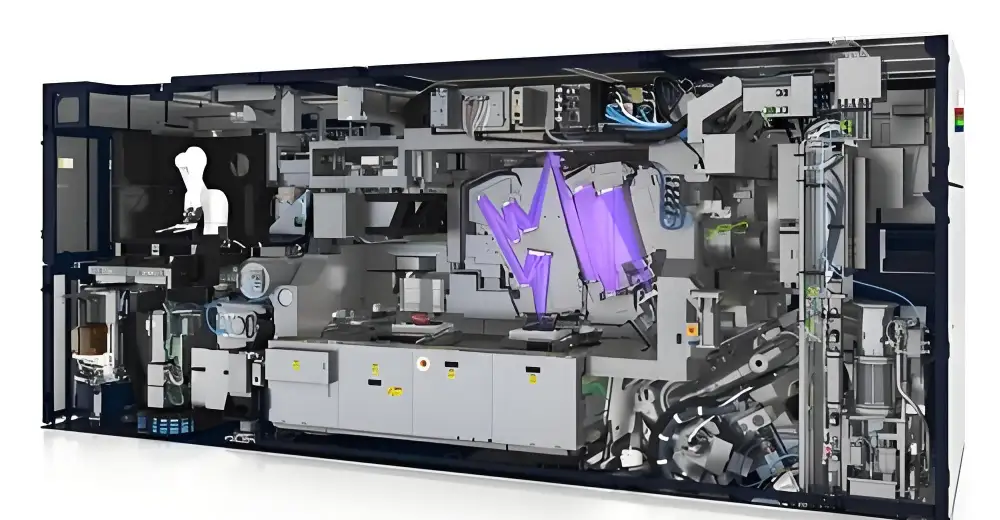
The introduction of ASML’s 2 nm lithography tools intensifies four interdependent cleanroom challenges that go far beyond standard ISO Class 3 or 4 specifications. First is particle control at the nanoscale: a single 10-nm particle landing on a reticle or wafer can cause catastrophic yield loss. That demands continuous monitoring, airflow uniformity >90%, and filtration redundancy—including ULPA-grade ceiling modules with zero-leak gasketing. Second is vibration sensitivity: high-NA optics require floor-mounted isolation slabs and structural decoupling from adjacent production lines—making prefab laboratory foundations with tuned mass dampers increasingly common.
Third is chemical molecular contamination (AMC). Photoresist outgassing, airborne amines, and sulfur compounds must be suppressed below 0.1 ppb—requiring activated carbon + potassium permanganate filter banks integrated into recirculation ductwork and strategically placed cleanroom air shower entry points. Fourth is spatial scalability and agility. Fabs no longer build monolithic cleanrooms years in advance. Instead, they deploy portable walk in cleanrooms around critical tools for rapid commissioning—or use prefab cleanroom enclosures to isolate metrology bays, mask storage, or EUV source chambers. These modular zones reduce cross-contamination risk while accelerating time-to-operation by up to 60% versus stick-built alternatives.
Crucially, all these requirements cascade into material and system selection. Wall integrity matters: non-shedding, static-dissipative clean room wall panels manufacturers must guarantee surface resistivity of 10⁶–10⁹ Ω/sq and withstand repeated IPA wipe-downs. Ceilings aren’t passive—they’re active airflow interfaces. Leading fabs now specify Cleanroom ceiling systems Factory-certified modules with integrated fan filter units (FFUs), pressure sensors, and real-time particulate feedback loops. And because personnel remain the largest contamination vector, entry protocols rely heavily on validated cleanroom air shower systems—like Pharma-Tek’s single-person air shower room—that deliver ≥20 m/s laminar airflow with 20-second dwell time and programmable cycle logic.
Modular vs Traditional Cleanroom Solutions
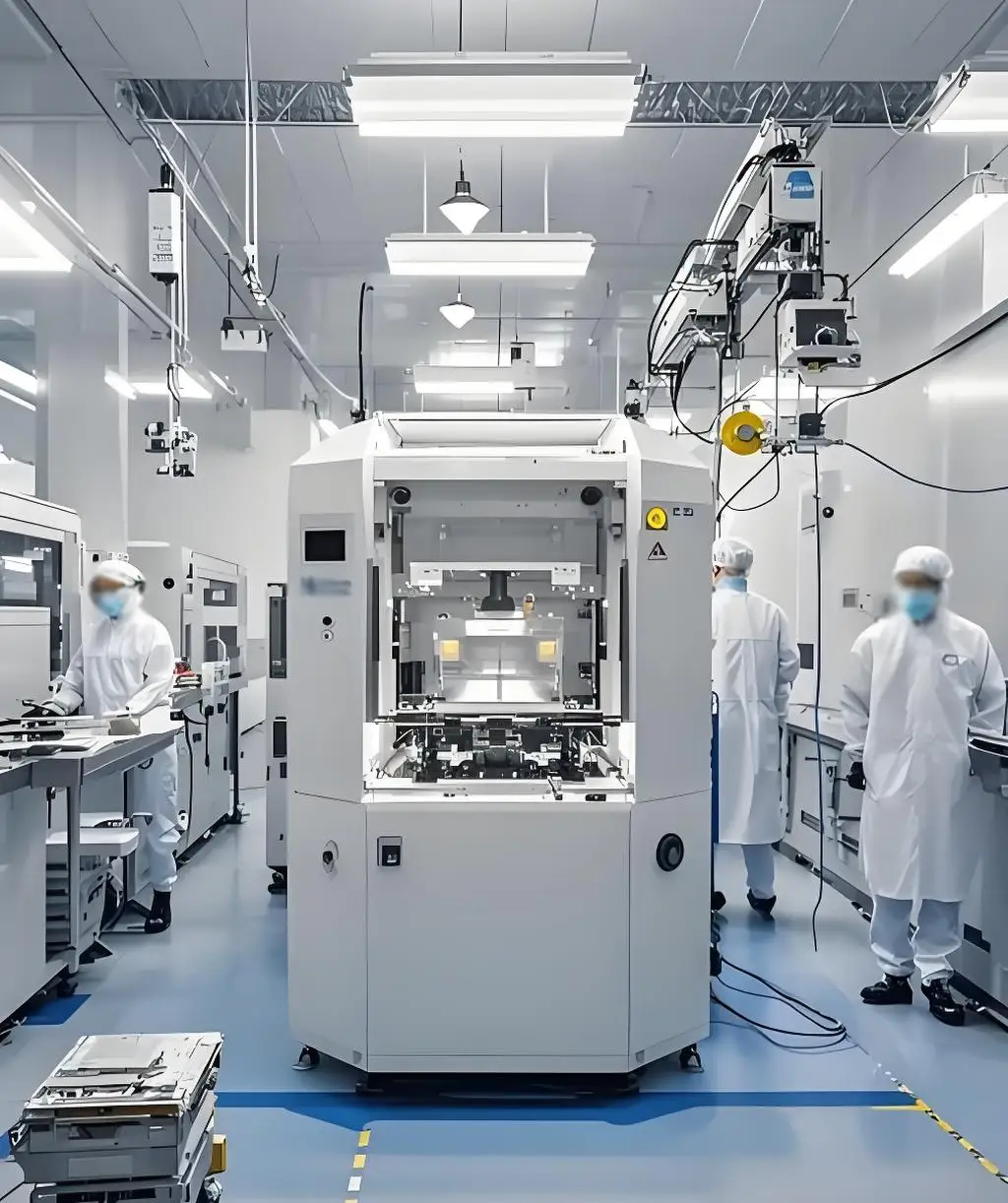
For semiconductor facilities scaling to support ASML’s 2 nm roadmap, the choice between traditional stick-built cleanrooms and modular approaches is no longer tactical—it’s strategic. Conventional construction often takes 12–18 months from design to qualification, with limited flexibility once walls are sealed. In contrast, prefab clean rooms and prefab lab buildings compress that timeline to 4–7 months, enabling phased deployment aligned with tool delivery schedules. More importantly, modular systems offer built-in compliance: factory-assembled wall panels arrive with full traceability (material certs, surface finish data, flammability ratings), reducing on-site QA overhead.
Take portable walk in cleanrooms, for example. These self-contained enclosures—typically built with aluminum frame + stainless steel or epoxy-coated steel panels—can be installed in existing shell space without structural modification. They integrate seamlessly with central HVAC or operate autonomously with rooftop-mounted AHUs. Their portability supports both temporary ramp-up capacity and permanent zone isolation—ideal for protecting EUV source modules or post-litho inspection stations. Similarly, prefab laboratory structures provide turnkey solutions for supporting functions: chemical prep labs, metrology calibration suites, and wafer transport staging areas—all pre-wired, pre-piped, and pre-tested before shipping.
Yet modularity doesn’t mean compromise. Top-tier cleanroom construction contractors now offer hybrid designs: structural steel frames clad in field-erected prefab cleanroom wall and ceiling systems, with factory-sealed joints and third-party ISO certification reports included. These hybrids balance speed with load-bearing integrity and long-term maintainability. And because cleanroom upgrades rarely happen in isolation, smart specifiers insist on interoperability—ensuring new pass thru box clean room units match existing wall panel thicknesses, ceiling grid spacing, and electrical cutouts. That’s where experienced suppliers add measurable value: not just selling components, but engineering continuity across the entire cleanroom ecosystem.
Critical Components and Specifications
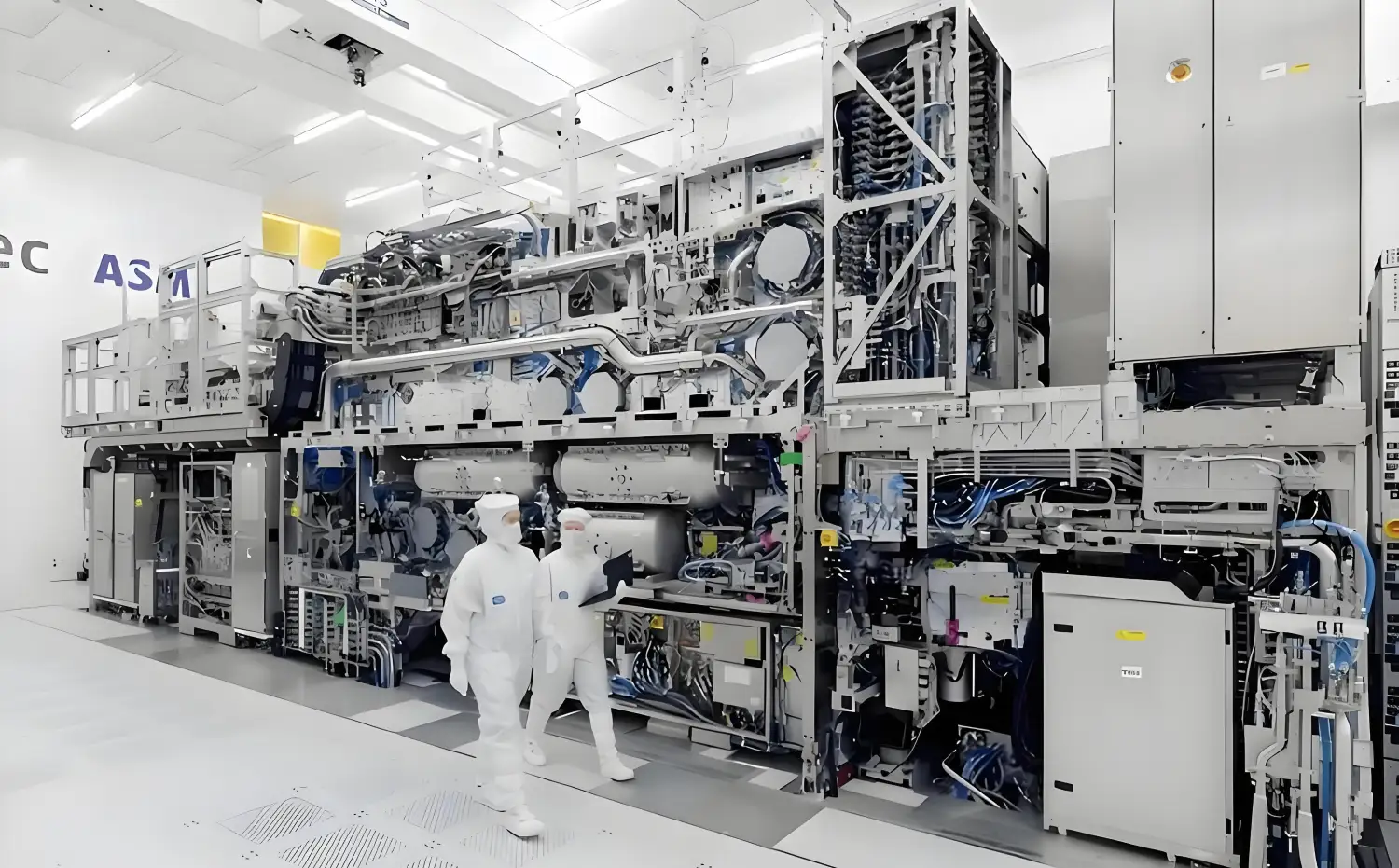
Every cleanroom serving ASML’s 2 nm platform hinges on five mission-critical subsystems—each requiring precise specification, certified sourcing, and coordinated installation. First, pass box cleanroom units must eliminate manual door handling. Dynamic pass boxes with interlocked doors, HEPA-filtered recirculation, and UV sterilization cycles are now baseline—not optional—for transferring wafers, masks, and optics between ISO Class 1 and ISO Class 3 zones. Leading pass box manufacturers like Pharma-Tek offer dynamic models with touchless operation, real-time differential pressure logging, and alarm-triggered cycle abort—critical for preventing cross-zone excursions.
Second, pass through boxes serve lower-risk transfers (tools, consumables, documentation). Static variants with dual-door interlock and stainless steel interiors remain cost-effective for non-critical corridors—but even these must meet strict surface finish (Ra ≤ 0.4 µm) and cleanability standards. Third, Cleanroom ceiling systems Design must prioritize serviceability: FFU access hatches, integrated lighting controls, and drop-ceiling compatibility for future sensor upgrades. Factories producing these systems—Cleanroom ceiling systems Factory partners—now offer digital twin integration, allowing facility managers to simulate airflow patterns before final layout approval.
Fourth, wall systems define containment integrity. Reputable clean room wall panels manufacturers provide panels with continuous weld seams, zero silicone sealants (replaced by EPDM gaskets), and fire ratings compliant with IFC and SEMI S2. Fifth, personnel decontamination is non-negotiable. A validated cleanroom air shower supplier ensures cycle repeatability, airflow velocity consistency, and full-body coverage—even for technicians wearing full bunny suits. As noted earlier, Pharma-Tek’s single-person air shower room meets all three criteria and integrates with building BMS via Modbus TCP.
Finally, don’t overlook logistics enablers: pass box suppliers must support fast lead times (<72-hour shipping for urgent replacements), and prefab cleanroom vendors should offer on-site commissioning support—including particle mapping, airflow visualization, and ISO 14644-1 certification assistance. When every hour of downtime costs six figures, responsiveness is as vital as specification accuracy.
Choosing the Right Cleanroom Supplier
Selecting a cleanroom partner for ASML’s 2 nm environment demands more than competitive pricing or catalog breadth. It requires evidence of domain-specific expertise, proven execution rigor, and collaborative engineering capacity. Start with verification: confirm whether potential cleanroom construction contractors hold SEMI-certified project managers on staff—and whether their prefab cleanroom installations have achieved ISO Class 1 certification in live semiconductor fabs. Ask for third-party test reports, not just internal QA summaries. Also, assess scalability: can the supplier support multi-site deployments across your global fab network using standardized prefab lab buildings and repeatable portable walk in cleanrooms configurations?
Look closely at component-level partnerships. A supplier offering both pass box cleanroom units *and* cleanroom air shower systems—ideally from the same quality-controlled supply chain—reduces integration risk and simplifies warranty management. Pharma-Tek, for instance, manufactures its dynamic pass box and pass through boxes under shared ISO 9001 and ISO 14001 systems, ensuring consistent gasket materials, hinge torque specs, and surface passivation. That kind of vertical alignment translates directly into reduced commissioning delays and fewer field modifications.
Equally important is lifecycle support. Does the clean room wall panels manufacturers offer panel replacement kits matched to original batch numbers? Can the Cleanroom ceiling systems Factory provide firmware updates for smart FFUs? Do pass box suppliers stock spare controllers and UV lamps with regional distribution centers? Suppliers who treat you as a long-term partner—not a one-off buyer—will co-develop maintenance SOPs, train your in-house technicians, and proactively notify you of material obsolescence or regulatory updates (e.g., new VOC limits affecting sealant chemistry). In high-stakes environments, trust isn’t assumed—it’s earned through documented performance, transparent communication, and unwavering accountability.
Frequently Asked Questions
What certifications should I verify when selecting cleanroom construction contractors for a 2 nm lithography cleanroom?
Verify ISO 9001:2015 certification for quality management—and specifically ask for project records showing successful ISO Class 1 or Class 2 cleanroom commissioning in semiconductor fabs. Contractors should also demonstrate SEMI S2/S8 safety compliance experience, IFC fire-rated assembly documentation, and third-party validation reports (e.g., TÜV, NSF, or UL) for wall/ceiling systems. Avoid firms that only cite “cleanroom experience” without fab-specific references.
Are portable walk in cleanrooms suitable for permanent ASML EUV tool enclosures?
Yes—when engineered to semiconductor-grade standards. Leading portable walk in cleanrooms now feature welded stainless steel frames, 0.5 mm thick 316L wall panels, integrated vibration damping mounts, and ULPA-grade ceiling systems rated for continuous 24/7 operation. They’re routinely deployed as permanent enclosures for EUV sources, metrology tools, and mask aligners—especially where retrofitting into existing fab shells is required. Key differentiators include seismic anchoring provisions, ESD grounding continuity testing, and compatibility with fab-wide BMS integration.
How do pass box cleanroom units impact overall cleanroom classification and validation?
A poorly specified or installed pass box cleanroom is a leading cause of cleanroom classification failure. Dynamic pass boxes with HEPA recirculation, interlocked doors, and negative pressure differentials (≥15 Pa) maintain zone integrity during transfer. Static units must include dual-door mechanical interlocks and ≥99.99% @ 0.3 µm filtration. Validation requires particle challenge testing (TDA-2H or PAO), airflow smoke studies, and differential pressure decay measurements. Always select pass box suppliers who provide IQ/OQ documentation templates and on-site validation support—not just hardware.