






CONTACT US

Static Pass Box
Overview:
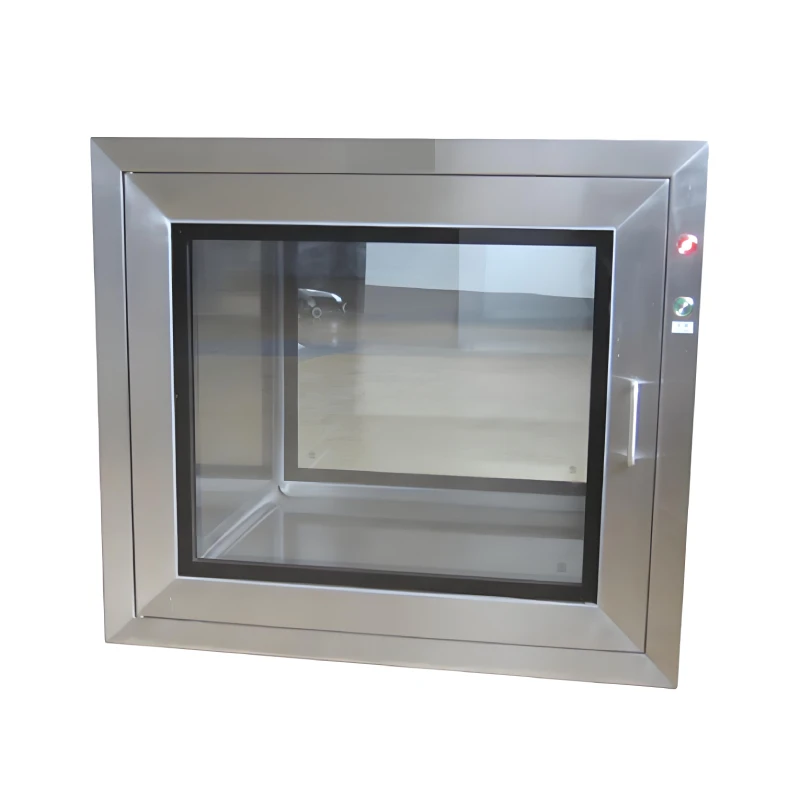
The Static Pass Box, also known as Static Transfer Window, is a material transfer device installed between clean and non-clean areas or between zones of different cleanliness levels. Unlike dynamic pass boxes that incorporate fans and filters, the Static Pass Box contains no powered devices and relies solely on physical isolation and interlocking mechanisms to achieve safe material transfer between areas of different cleanliness levels. The Static Pass Box offers advantages including simple structure, low cost, easy maintenance, and noise-free operation. It is a fundamental material transfer device for cleanrooms and is widely used in pharmaceutical, biological laboratory, electronics manufacturing, and food processing industries.
Hot Tags:
DETAIL:
1. Product Overview
The Static Pass Box, also known as Static Transfer Window, is a material transfer device installed between clean and non-clean areas or between zones of different cleanliness levels. Unlike dynamic pass boxes that incorporate fans and filters, the Static Pass Box contains no powered devices and relies solely on physical isolation and interlocking mechanisms to achieve safe material transfer between areas of different cleanliness levels.
The Static Pass Box offers advantages including simple structure, low cost, easy maintenance, and noise-free operation. It is a fundamental material transfer device for cleanrooms and is widely used in pharmaceutical, biological laboratory, electronics manufacturing, and food processing industries.
2. Working Principle
The working principle of the Static Pass Box is based on two core mechanisms: physical isolation and interlock control.
First, Physical Isolation. The pass box housing physically separates two areas of different cleanliness levels. Both doors remain closed under normal conditions, forming a physical barrier that prevents direct air exchange between the two sides.
Second, Interlock Protection. An interlock device is installed between the two doors. When one door is opened, the opposite door is automatically locked and cannot be opened. This design ensures that only one door can be opened at any given time, effectively preventing cross-contamination through airflow.
Third, Material Transfer Process. The operator on the low-cleanliness side opens the outer door, places the material inside the chamber, and closes the outer door. The interlock then releases the lock on the opposite door. The operator on the high-cleanliness side opens the inner door, removes the material, and closes the inner door, completing one full transfer cycle.
Fourth, Seal Maintenance. When both doors are closed, the sealing device of the pass box ensures airtightness between the housing and doors, maintaining stable pressure differential between the two sides.
3. Product Structure and Components
The Static Pass Box consists of the following core components:
Housing: Manufactured from high-quality stainless steel sheet or cold-rolled steel sheet, with brushed or coated finish. The interior surface is smooth and flat for easy cleaning. The housing structure is robust with good sealing properties.
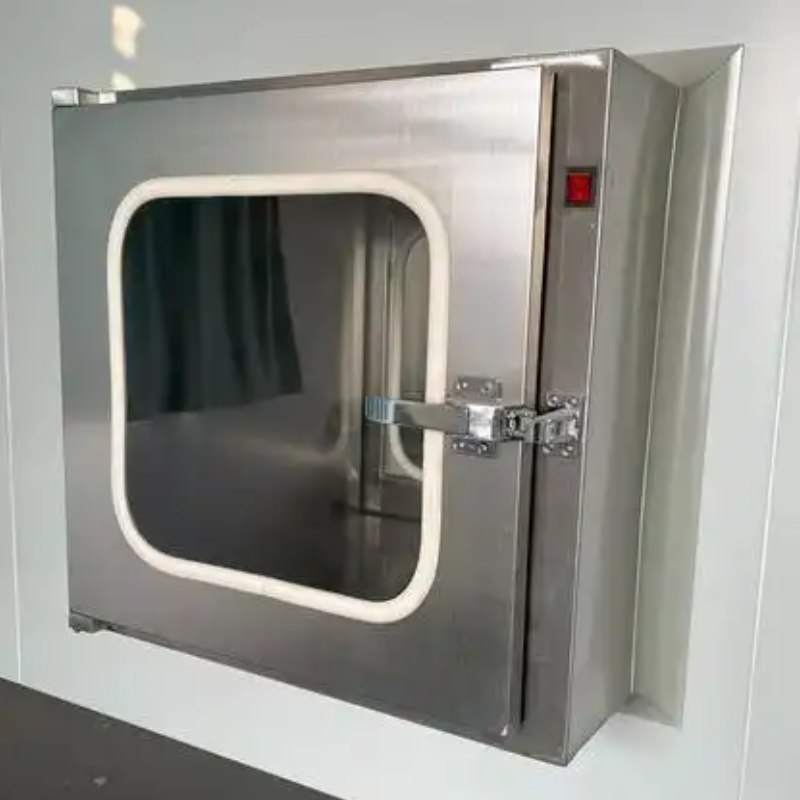
Doors: Typically double-layer tempered glass doors or stainless steel doors with transparent viewing windows for observing the contents. Doors are connected to the housing via hinges for smooth opening and closing.
Interlock Device: Includes mechanical interlock and electronic interlock. Mechanical interlock uses mechanical linkages to achieve door interlocking without power supply. Electronic interlock uses electromagnetic locks and control circuits requiring power supply, offering better reliability and safety.
Sealing Device: High-elasticity sealing gaskets or magnetic sealing strips installed on the door edges to ensure airtightness when doors are closed.
Work Surface: The interior bottom surface is a flat work surface, typically made of stainless steel for wear resistance and easy cleaning. Some models can be equipped with non-powered rollers for transferring heavier items.
Handle: Stainless steel handles installed on doors, meeting cleanroom hygiene requirements and providing easy operation.
Indicator Lights: Electronic interlock models typically feature status indicator lights showing door open/close status and interlock status.
Buzzer: Some models emit an audible alarm when a door remains open for an extended period, reminding operators to close the door.
Control Panel: Electronic interlock models are equipped with a simple control panel for controlling interlock logic and alarm settings.
4. Features and Advantages
First, Simple Structure. The Static Pass Box contains no complex components such as fans or filters. The structure is simple and reliable with low failure rate.
Second, Cost Effective. With no power or filtration systems, the manufacturing and maintenance costs of Static Pass Boxes are significantly lower than dynamic pass boxes, making them suitable for budget-constrained projects.
Third, Noise-Free Operation. The Static Pass Box has no moving mechanical parts during operation, resulting in completely silent operation, suitable for noise-sensitive laboratories and medical facilities.
Fourth, Easy Maintenance. Daily maintenance is limited to cleaning interior and exterior surfaces and inspecting sealing gaskets. No filter replacement or fan maintenance is required, resulting in low maintenance workload.
Fifth, Flexible Installation. Static Pass Boxes are lightweight and compact, making installation easy. They can be installed on various wall types including sandwich panel walls, brick walls, and drywall.
Sixth, Energy Efficient. Static Pass Boxes require no power except for the electronic interlock (which consumes minimal electricity). This meets energy efficiency requirements.
Seventh, Safe and Reliable. The interlock device ensures both doors cannot be opened simultaneously, effectively preventing cross-contamination. Electronic interlock models also feature power-off protection where all doors automatically lock when power is lost.
Eighth, Highly Customizable. Dimensions, materials, interlock type, door style, and other features can be customized according to customer requirements to suit different application scenarios.
5. Technical Specifications (Standard)
Housing Material: 304 stainless steel or 316L stainless steel, or cold-rolled steel sheet with powder coating
Door Material: Stainless steel door or double-layer tempered glass door (with viewing window)
Window Glass Thickness: 4 to 5 millimeters tempered glass
Interlock Type: Mechanical interlock or electronic interlock
Power Supply: Mechanical interlock requires no power; electronic interlock requires AC220V 50Hz
Standard Dimensions (Width × Depth × Height): Common sizes include 400×400×400mm, 500×500×500mm, 600×600×600mm, 600×600×800mm, 800×800×800mm, and non-standard custom sizes available
Work Surface: Stainless steel flat plate or non-powered rollers
Sealing Gasket: Silicone sealing gasket or EPDM sealing gasket
Surface Finish: Brushed finish or mirror polished
Operating Temperature: 0 to 40 degrees Celsius
Operating Humidity: Less than 95% relative humidity
Installation Method: Wall recessed installation
6. Product Classification
By Interlock Type: Mechanical Interlock Static Pass Box uses purely mechanical structure for interlocking, requires no power, suitable for locations without power supply or sensitive to electromagnetic interference. Electronic Interlock Static Pass Box uses electromagnetic locks and controllers for interlocking, offers fast response, high reliability, and alarm functions, suitable for GMP-compliant applications.
By Door Type: Stainless Steel Door Static Pass Box features all-stainless steel door structure, robust and durable, suitable for high-frequency use. Glass Door Static Pass Box features double-layer tempered glass door structure, high transparency for easy viewing of contents, suitable for applications requiring real-time visibility.
By Material: All-Stainless Steel Static Pass Box made entirely of 304 or 316L stainless steel, highly corrosion-resistant, suitable for pharmaceutical and biological laboratories. Carbon Steel Powder Coated Static Pass Box housing made of cold-rolled steel with powder coating, lower cost, suitable for general industrial environments.
By Installation Method: Standard Recessed Static Pass Box installed flush into the wall, level with the wall surface. Wall-Mounted Static Pass Box fixed to the wall surface via flange, suitable for thin walls or locations where large openings cannot be made.
By Application: Standard Static Pass Box provides basic transfer and interlock functions only. UV Static Pass Box features built-in UV sterilization lamp for initial surface disinfection of items. Clean Static Pass Box features specially treated interior with smooth, dead-corner-free surfaces, suitable for higher cleanliness requirements.
7. Application Areas
Static Pass Boxes are widely used in various locations with certain cleanliness requirements but without the need for complex purification functions.
Pharmaceutical Industry: Used for material transfer in non-sterile drug production workshops, API production workshops, packaging workshops, and between warehouses and production areas. Static Pass Boxes are suitable for material transfer between Grade C and Grade D clean areas and between clean and non-clean areas.
Biological Laboratories: Used for sample and reagent transfer in general biological laboratories, microbiology laboratories, and molecular biology laboratories. Static Pass Boxes can be used with UV sterilization lamps for initial surface disinfection.
Electronics Manufacturing: Used for material transfer in electronic component assembly workshops, PCB production workshops, and precision instrument assembly workshops. Static Pass Boxes prevent dust and particles from migrating between different areas.
Hospitals and Medical Facilities: Used for item transfer in general wards, outpatient treatment rooms, central sterile supply departments, and for medication transfer between pharmacies and nurse stations.
Food Processing: Used for material transfer between food packaging workshops, raw material preparation areas, and finished product warehouses, preventing pests and dust from entering production areas.
Cosmetics Production: Used for material transfer between cosmetics filling workshops, packaging workshops, and warehouses, maintaining sanitary conditions in production areas.
Printing and Packaging: Used for material transfer in printing workshops and laminating workshops with certain cleanliness requirements.
General Industry: Used for material transfer between general workshops and warehouses in electronics, machinery, chemical, and other industries, reducing dust and foreign matter entering production areas.
Research Institutions: Used for sample, reagent, and tool transfer in various research laboratories, reducing the impact of personnel entry and exit on experimental environments.
Data Centers: Used for equipment transfer between server rooms and maintenance corridors, reducing the impact of personnel entry and exit on the data center environment.
8. Comparison with Other Pass Boxes
Static Pass Box vs. Dynamic Pass Box: Static Pass Box has no fan or filter, relying on physical isolation and interlock for transfer. Dynamic Pass Box has built-in fan and filter with self-cleaning capability. Static Pass Box offers low cost, no noise, and maintenance-free operation. Dynamic Pass Box has higher cost, some noise, and requires regular filter replacement and fan maintenance. Static Pass Box is suitable for lower cleanliness requirements or items not sensitive to contamination. Dynamic Pass Box is suitable for aseptic transfer between high-grade clean areas.
Static Pass Box vs. VHP Pass Box: VHP Pass Box features vaporized hydrogen peroxide sterilization capability, achieving Log6 kill rate. Static Pass Box has no sterilization capability. VHP Pass Box is suitable for aseptic transfer with high cost and long cycle time. Static Pass Box is suitable for general clean item transfer with low cost and fast transfer speed.
Static Pass Box vs. UV Pass Box: UV Pass Box adds a UV sterilization lamp to the Static Pass Box design, providing surface disinfection of items. Static Pass Box relies solely on physical isolation. UV Pass Box is suitable for applications requiring initial disinfection of item surfaces. Static Pass Box is suitable for applications with no disinfection requirement or where items are pre-disinfected.
9. Selection Guide
Cleanliness Level Requirement: Select the appropriate product based on the cleanliness level difference between the two sides of the pass box. For small differences with no sterility requirement, Static Pass Box is suitable. For large differences or sterility requirements, Dynamic Pass Box or VHP Pass Box should be selected.
Item Characteristics: Determine the internal dimensions based on the size of items to be transferred. Consider the maximum length, width, and height of items, allowing appropriate clearance. For heavy items, consider selecting non-powered rollers.
Frequency of Use: For high-frequency use, electronic interlock type is recommended for fast response and high reliability. For low-frequency use, mechanical interlock type can be selected, requiring no power and offering lower cost.
Installation Environment: Confirm wall type and thickness, and select recessed or wall-mounted installation. For sandwich panel walls, standard recessed installation is suitable. For brick or concrete walls, installation openings must be prepared.
Material Requirements: For pharmaceutical and biological laboratories, all-304 or 316L stainless steel is recommended. For general industrial environments, carbon steel with powder coating is suitable.
Budget Constraints: When budget is limited and cleanliness requirements are moderate, Static Pass Box is an economical and reasonable choice. Electronic interlock type is more expensive than mechanical interlock type. Stainless steel material is more expensive than carbon steel material.
Compliance Requirements: The pharmaceutical industry should select pass boxes that comply with GMP requirements, typically requiring material certificates and factory inspection reports.
Door Type: Choose glass door when real-time viewing of contents is needed. Choose stainless steel door when high durability is required.
10. Installation and Maintenance
Installation Key Points: Cut an opening in the wall according to the external dimensions of the pass box. Insert the pass box housing into the wall opening, ensuring it is level. Fill gaps between the housing and wall with sealing compound or sealing gaskets to ensure sealing. Secure the pass box to the wall using mounting screws or fixing flanges. For electronic interlock type, connect power supply and ground. Install the doors and adjust hinges for smooth opening and closing. Test interlock functionality.
Daily Maintenance: Clean interior and exterior surfaces and viewing windows daily using lint-free cloth and appropriate cleaning agents. Regularly inspect sealing gaskets for aging, damage, or deformation; replace if damaged. Regularly check door hinges for looseness and tighten screws. For mechanical interlock type, regularly check interlock mechanism for smooth operation and apply lubricant if necessary. For electronic interlock type, regularly check indicator lights and buzzer for proper operation; test power-off protection function. Check doors for smooth opening and closing; adjust if sticking occurs.
Filter Replacement: Static Pass Box has no filter, so no filter maintenance is required.
Common Troubleshooting: If interlock fails, check whether the mechanical interlock linkage is stuck or whether the electronic interlock electromagnetic lock and controller are functioning properly. If doors do not close properly, check whether sealing gaskets are deformed or hinges are loose. If electronic interlock type has no power, check power connection and fuse. If indicator lights do not illuminate, check whether bulbs or LEDs are damaged. If buzzer alarms continuously, check whether doors are fully closed or whether the alarm delay setting is appropriate.
FAQ
- 1 How do electronic interlocks improve operation?
- 2 What installation method is best for sterile applications?
- 3 What sealing gasket maintenance is required?
- 4 What is the proper disinfection procedure for materials?
- 5 Is surface sampling required for pass-through chambers?
- 6 How should pass-through chambers be classified for cleanliness?
- 7 How does the door interlock system work?
- 8 What is the main purpose of a pass-through chamber?
- 9 What are the differences between various Pass Box types?
- 10 How to manage material transfer in sterile environments?
- 11 How to handle weighing processes in hazardous environments?
- 12 What are the differences between various material transfer systems?
1
How do electronic interlocks improve operation?
Electronic interlocks provide audio/visual alerts when doors are left open, prevent accidental damage from forced opening, enable BMS integration, and support access control with user data logging.
2
What installation method is best for sterile applications?
Use fully-welded stainless steel construction with continuous seam welds and smooth radius corners. This eliminates hard-to-clean cracks and crevices where contaminants can accumulate.
3
What sealing gasket maintenance is required?
Inspect EPDM or silicone gaskets for 250% compression when door closed. Replace if hardened, cracked, or loss of elasticity. Clean with 70% alcohol; avoid chlorine or strong acid cleaners that cause corrosion.
4
What is the proper disinfection procedure for materials?
Follow "clean first, then disinfect" - remove outer packaging, wipe with 70% isopropyl alcohol or 0.5% peracetic acid, place with spacing between items, and expose to UV for minimum 15 minutes (30 minutes recommended).
5
Is surface sampling required for pass-through chambers?
Yes. USP 797 requires surface sampling of all classified areas including pass-through chambers. Category 1/2 CSPs require monthly sampling; Category 3 requires weekly sampling and batch-end sampling.
6
How should pass-through chambers be classified for cleanliness?
Assign the ISO classification of the cleaner connected space. For example, if a pass-through connects ISO 8 to ISO 7, classify it as ISO 7. Industry best practice follows the higher standard of the two connected areas.
7
How does the door interlock system work?
The interlock (mechanical or electronic) allows only one door to open at a time. When one door opens, the opposite door automatically locks, creating an airlock that prevents cross-contamination and maintains room pressure differentials.
8
What is the main purpose of a pass-through chamber?
A pass-through chamber is an enclosure installed in a cleanroom wall to facilitate material transfer between areas while minimizing contamination risk. It reduces foot traffic, maintains differential pressure, and prevents unfiltered air exchange through interlocked doors.
9
What are the differences between various Pass Box types?
Material transfer between zones uses specific boxes. A cleanroom Dynamic Pass Box includes interlocked doors and UV lights for active decontamination. For simple transfers, a cleanroom Static PassBox serves as a physical barrier without active air circulation. Highly sensitive materials may require a cleanroom VHP Pass Box which uses vaporized hydrogen peroxide for sterilization. Selection depends on the criticality of the items being transferred between classified areas.
10
How to manage material transfer in sterile environments?
Safe transfer prevents cross-contamination. A cleanroom Pass Box allows small item exchange between zones. For active airflow control, a cleanroom Dynamic Pass Box purges particles during transfer. Sterile applications often require a cleanroom VHP Pass Box using vaporized hydrogen peroxide for thorough decontamination of materials entering isolator systems.
11
How to handle weighing processes in hazardous environments?
Potent compound handling requires containment. A cleanroom Negative Pressure Weighing Room protects operators from exposure. Materials enter through a cleanroom Aluminum Pass Box designed for durability. For non-powered transfer, a cleanroom Static PassBox provides a simple interlocked chamber ensuring safety while handling fine powders within the controlled negative pressure environment setup.
12
What are the differences between various material transfer systems?
Material transfer requires strict protocols to prevent cross-contamination. A standard cleanroom Pass Box suits general non-sterile items, while a cleanroom Dynamic Pass Box includes interlocking mechanisms for higher safety. For personnel hygiene before entry, a cleanroom Air Shower Room removes particulates from clothing. Selecting the right transfer method depends on the specific cleanliness class and workflow requirements within the facility design.