






CONTACT US
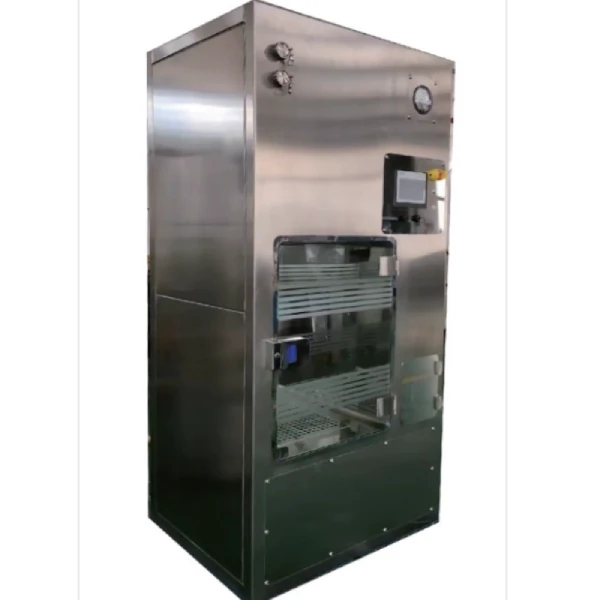
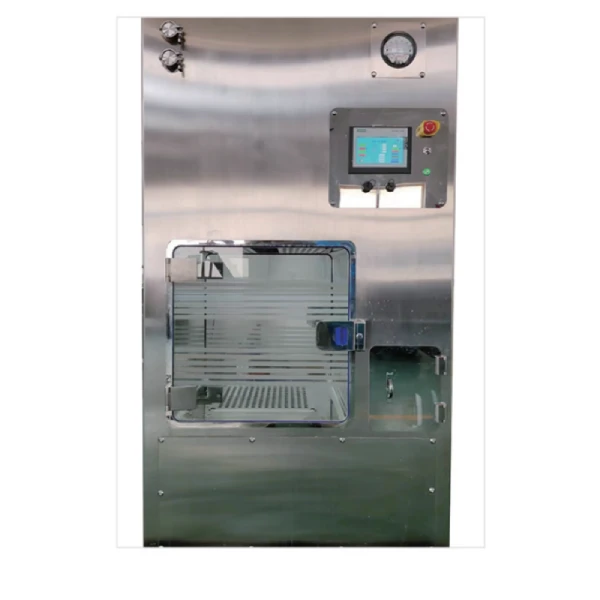
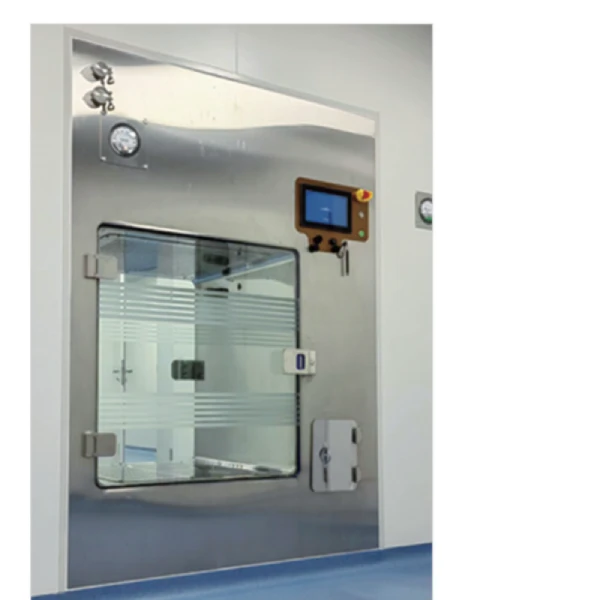
VHP Pass Box
Overview:
The VHP Pass Box (Vaporized Hydrogen Peroxide Sterile Pass Box) is a sealed transfer device designed for biological decontamination of material surfaces. Using Vaporized Hydrogen Peroxide (VHP) as the sterilizing agent, it operates at low temperature and atmospheric pressure to achieve high-efficiency surface sterilization. It is ideal for transferring items from low-grade clean areas to high-grade clean areas. This equipment addresses the inadequate sterilization effectiveness of traditional UV pass boxes, achieving Log6 kill rate (99.9999% sterilization). It is a critical aseptic transfer solution that fully complies with GMP requirements.
Hot Tags:
DETAIL:
1. Product Overview
The VHP Pass Box (Vaporized Hydrogen Peroxide Sterile Pass Box) is a sealed transfer device designed for biological decontamination of material surfaces. Using Vaporized Hydrogen Peroxide (VHP) as the sterilizing agent, it operates at low temperature and atmospheric pressure to achieve high-efficiency surface sterilization. It is ideal for transferring items from low-grade clean areas to high-grade clean areas.
This equipment addresses the inadequate sterilization effectiveness of traditional UV pass boxes, achieving Log6 kill rate (99.9999% sterilization). It is a critical aseptic transfer solution that fully complies with GMP requirements.
2. Working Principle
The core working principle of the VHP Pass Box is based on Flash Evaporation technology, which rapidly converts liquid hydrogen peroxide into hydrogen peroxide vapor for thorough surface sterilization.
The working cycle consists of five stages:
Stage 1: Chamber Leak Detection. Pressurize the chamber to check airtightness; ensure leakage rate ≤0.5%VOL/h at 100Pa before sterilization.
Stage 2: Preheating and Dehumidification. Supply clean, dry air into the chamber to maintain low humidity, optimizing VHP sterilization efficacy.
Stage 3: Sterilization Cycle. Inject hydrogen peroxide vapor, maintain target concentration for 30-60 minutes; verify with chemical and biological indicators.
Stage 4: Residue Removal. Stop VHP input, activate residue removal system; catalytically decompose and ventilate until H₂O₂ residual ≤1ppm.
Stage 5: Class A Laminar Flow. Maintain laminar airflow to ensure aseptic environment during material transfer.
Sterilization Validation: Using Bacillus stearothermophilus ATCC 7953 as biological indicator, achieving 10⁻⁶ Sterility Assurance Level (SAL).
3. Product Structure and Components
The VHP Pass Box consists of the following core components:
Chamber: Interior made of 316L stainless steel, exterior of 304 stainless steel. Corrosion-resistant and easy to clean, with mirror-polished interior and rounded corners for no dead space.
VHP Generator: Integrated flash evaporation system that vaporizes hydrogen peroxide solution at low temperature to produce high-efficiency sterilizing gas.
Circulation Fan: Low-noise centrifugal fan that drives gas circulation for uniform VHP distribution.
HEPA Filtration System: Supply HEPA H14 and exhaust HEPA H14 filters, ensuring all air entering and exiting the chamber is filtered to prevent secondary contamination.
Sealing System: Inflatable high-density gasket that expands during operation to ensure absolute chamber sealing.
Interlock System: Electromagnetic interlock that prevents simultaneous door opening and avoids cross-contamination.
Control System: PLC with HMI touchscreen (Siemens or equivalent), featuring three-level access control, electronic signature, audit trail functionality, and SCADA data acquisition support.
Sensor System: Includes temperature and humidity sensors, differential pressure sensors, and hydrogen peroxide concentration sensors for real-time online monitoring to ensure precise process control.
4. Features and Advantages
First, High Sterilization Efficiency. Flash evaporation technology ensures efficient hydrogen peroxide conversion. Log6 kill rate validated by biological indicators. Fast cycle time of 1-2 hours for complete aseptic transfer.
Second, High Safety. Inflatable sealing ensures absolute containment during sterilization cycles. Independent ventilation unit prevents contamination of facility HVAC system. Residual H₂O₂ ≤1ppm after cycle completion, safe for operators and environment.
Third, No Dead Corner Design. Integrated mirror-polished interior with large-radius rounded corners. Horizontal laminar flow ensures uniform H₂O₂ gas distribution. Optional mobile perforated shelves enable thorough sterilization from all sides.
Fourth, High Automation. Siemens PLC control with color touchscreen operation. Three-level access control, electronic signature, and audit trail functionality. Compliant with 21 CFR Part 11 and GMP computerized system validation requirements. Sterilization parameters can be printed and recorded for archive management.
Fifth, Easy Installation and Maintenance. Main components and pipelines arranged on single side, requiring only one-side maintenance space. Removable HEPA filter design for easy replacement.
5. Technical Specifications (Standard)
Chamber Material: Interior 316L stainless steel, exterior 304 stainless steel.
Surface Finish: Mirror polished, Ra less than 0.6μm, rounded corners.
HEPA Filter Grade: Supply HEPA H14, exhaust HEPA H14.
Sterilant: 30-35% food-grade hydrogen peroxide solution.
Sterilization Efficacy: Log6 kill rate (Bacillus stearothermophilus ATCC 7953).
Cycle Time: Less than 120 minutes.
Residual Concentration: Less than or equal to 1ppm.
Chamber Cleanliness: Complies with EU GMP Class B / ISO Class 5.
Air Changes: Greater than or equal to 80 per hour.
Leakage Rate: Less than or equal to 0.5%VOL/h at 100Pa.
Tightness Standard: Complies with ISO 10648-2.
Control System: Siemens PLC with HMI touchscreen.
Power Supply: AC220V/50Hz or AC380V/50Hz.
Noise Level: Less than or equal to 70dB(A).
Standard Chamber Sizes (Interior Width × Depth × Height):
Model VHPB-125: 500×500×500 mm, suitable for laboratory small batch transfer.
Model VHPB-200: 600×600×600 mm, suitable for general pharmaceutical and laboratory use.
Model VHPB-350: 700×700×700 mm, suitable for medium batch transfer.
Model VHPB-500: 800×800×800 mm, suitable for production material transfer.
Model VHPB-800: 900×900×1000 mm, suitable for large batch or large item transfer.
Model VHPB-1200: 1200×1000×1000 mm, suitable for pallet or bulk material transfer.
6. Product Classification
Standard VHP Pass Box: Integrated VHP generator with complete sterilization, ventilation, and laminar flow functions. Suitable for pharmaceutical manufacturing and aseptic laboratories.
VHP Sterilization Chamber: Large volume, capable of pallet sterilization. Suitable for biopharmaceutical bulk drug substance and vaccine production.
Isolator VHP Pass Box: Integrated with isolator system, double-door sealed design. Suitable for aseptic filling lines and cell therapy product manufacturing.
Biosafety VHP Pass Box: Biosafety-level sealing, suitable for BSL-3 laboratories and other high-containment biosafety facilities.
7. Application Areas
VHP Pass Boxes are widely used in industries and scenarios with stringent sterility requirements.
Pharmaceutical Industry: Aseptic transfer of raw material and excipient outer packaging into Grade B or A areas. Transfer of production tools and molds. Transfer of culture media, buffers, and sterile materials. Compliant with GMP Annex 1 requirements for sterile products.
Biopharmaceutical and Vaccine Production: Aseptic transfer of cell cultures and viral vectors. Material transfer in vaccine manufacturing processes. GMP production of gene therapy products.
Biosafety Laboratories: Material transfer in BSL-2 and BSL-3 laboratories. Sealed transfer of pathogenic microorganism samples. Safe removal of experimental waste.
Medical Facilities: Sterile transfer of surgical instruments and implants. Material transfer in sterile compounding pharmacies.
Laboratory Animal Facilities: Sterile transfer of animal cages and bedding. Material sterilization transfer in SPF animal rooms.
Transferable items include: Material drums and open containers. Operating tools and laboratory instruments. Environmental monitoring equipment (petri dishes, air samplers). Sealed packaged items.
8. Comparison with Traditional UV Pass Box
Sterilization Principle: Traditional UV pass box uses UV irradiation; VHP pass box uses vaporized hydrogen peroxide gas.
Coverage: Traditional UV pass box provides surface-only coverage with shadow areas; VHP pass box provides gas distribution with complete coverage.
Kill Rate: Traditional UV pass box achieves low to medium level (Log3-4); VHP pass box achieves high level (Log6).
Suitable Items: Traditional UV pass box is suitable only for flat, smooth surfaces; VHP pass box is suitable for all shapes, including complex geometries.
Validation: Traditional UV pass box is difficult to quantify; VHP pass box allows quantitative validation with biological indicators.
GMP Compliance: Traditional UV pass box has limited compliance; VHP pass box is fully compliant with current GMP requirements.
9. Selection Guide
Item Size: Select chamber size based on maximum item dimensions.
Sterility Requirement: Confirm whether Log6 sterilization capability is required.
Installation Environment: Verify wall opening dimensions and installation method; reserve maintenance space.
Control System: GMP environment requires audit trail and electronic signature functionality.
Validation Support: Select supplier that provides IQ, OQ, and PQ validation documentation.
Standards Compliance: Ensure compliance with GMP, ISO 14644, ISO 10648-2 and other applicable standards.
10. Installation and Maintenance
Installation Key Points: Cut appropriate opening in the wall. Ensure level installation with proper sealing. Reserve single-side maintenance space (minimum 600mm). Connect power supply, compressed air, and exhaust ducting.
Daily Maintenance: Clean interior and exterior surfaces daily. Regularly inspect sealing gasket integrity. Periodically calibrate sensors (temperature, humidity, hydrogen peroxide concentration). Conduct regular HEPA filter integrity testing (PAO leak test). Replace HEPA filters as required. Validate sterilization cycle efficacy with biological indicator challenge tests.
FAQ
- 1 How do electronic interlocks improve operation?
- 2 What installation method is best for sterile applications?
- 3 What sealing gasket maintenance is required?
- 4 What is the proper disinfection procedure for materials?
- 5 Is surface sampling required for pass-through chambers?
- 6 How should pass-through chambers be classified for cleanliness?
- 7 How does the door interlock system work?
- 8 What is the main purpose of a pass-through chamber?
- 9 What are the differences between various Pass Box types?
- 10 How to manage material transfer in sterile environments?
- 11 How to handle weighing processes in hazardous environments?
- 12 What are the differences between various material transfer systems?
1
How do electronic interlocks improve operation?
Electronic interlocks provide audio/visual alerts when doors are left open, prevent accidental damage from forced opening, enable BMS integration, and support access control with user data logging.
2
What installation method is best for sterile applications?
Use fully-welded stainless steel construction with continuous seam welds and smooth radius corners. This eliminates hard-to-clean cracks and crevices where contaminants can accumulate.
3
What sealing gasket maintenance is required?
Inspect EPDM or silicone gaskets for 250% compression when door closed. Replace if hardened, cracked, or loss of elasticity. Clean with 70% alcohol; avoid chlorine or strong acid cleaners that cause corrosion.
4
What is the proper disinfection procedure for materials?
Follow "clean first, then disinfect" - remove outer packaging, wipe with 70% isopropyl alcohol or 0.5% peracetic acid, place with spacing between items, and expose to UV for minimum 15 minutes (30 minutes recommended).
5
Is surface sampling required for pass-through chambers?
Yes. USP 797 requires surface sampling of all classified areas including pass-through chambers. Category 1/2 CSPs require monthly sampling; Category 3 requires weekly sampling and batch-end sampling.
6
How should pass-through chambers be classified for cleanliness?
Assign the ISO classification of the cleaner connected space. For example, if a pass-through connects ISO 8 to ISO 7, classify it as ISO 7. Industry best practice follows the higher standard of the two connected areas.
7
How does the door interlock system work?
The interlock (mechanical or electronic) allows only one door to open at a time. When one door opens, the opposite door automatically locks, creating an airlock that prevents cross-contamination and maintains room pressure differentials.
8
What is the main purpose of a pass-through chamber?
A pass-through chamber is an enclosure installed in a cleanroom wall to facilitate material transfer between areas while minimizing contamination risk. It reduces foot traffic, maintains differential pressure, and prevents unfiltered air exchange through interlocked doors.
9
What are the differences between various Pass Box types?
Material transfer between zones uses specific boxes. A cleanroom Dynamic Pass Box includes interlocked doors and UV lights for active decontamination. For simple transfers, a cleanroom Static PassBox serves as a physical barrier without active air circulation. Highly sensitive materials may require a cleanroom VHP Pass Box which uses vaporized hydrogen peroxide for sterilization. Selection depends on the criticality of the items being transferred between classified areas.
10
How to manage material transfer in sterile environments?
Safe transfer prevents cross-contamination. A cleanroom Pass Box allows small item exchange between zones. For active airflow control, a cleanroom Dynamic Pass Box purges particles during transfer. Sterile applications often require a cleanroom VHP Pass Box using vaporized hydrogen peroxide for thorough decontamination of materials entering isolator systems.
11
How to handle weighing processes in hazardous environments?
Potent compound handling requires containment. A cleanroom Negative Pressure Weighing Room protects operators from exposure. Materials enter through a cleanroom Aluminum Pass Box designed for durability. For non-powered transfer, a cleanroom Static PassBox provides a simple interlocked chamber ensuring safety while handling fine powders within the controlled negative pressure environment setup.
12
What are the differences between various material transfer systems?
Material transfer requires strict protocols to prevent cross-contamination. A standard cleanroom Pass Box suits general non-sterile items, while a cleanroom Dynamic Pass Box includes interlocking mechanisms for higher safety. For personnel hygiene before entry, a cleanroom Air Shower Room removes particulates from clothing. Selecting the right transfer method depends on the specific cleanliness class and workflow requirements within the facility design.