







Dynamic Pass Box: Practical Planning for Reliable biopharmaceutical Facilities, Lower Risk, and Long-Term Operating Value
Dynamic Pass Box guidance for biopharmaceutical projects covers contamination control, installation, validation, maintenance, lifecycle cost, and future expansion.
Defining Requirements and Project Risk
A successful Dynamic Pass Box project begins with the process rather than a product catalogue. For Biopharmaceuticals and Life Sciences teams, the immediate objective is to support contamination control, repeatable cleaning, documented operation, and dependable product protection. Owners should document room functions, contamination sensitivities, people and material routes, utility loads, cleaning methods, and planned capacity before selecting components. This operating brief gives designers and suppliers measurable targets and prevents the project from paying for performance that the process does not need.
Early risk mapping should show where particles, pressure loss, moisture, heat, or maintenance activity can affect production. Decisions about clean room pass box become clearer when each risk is connected to an owner, acceptance criterion, and response. The team should distinguish critical zones from support spaces and define how gowning, material transfer, sanitation, maintenance access, and change control will be managed. This avoids solving every room with the same specification and helps investment follow actual business and quality priorities.
Layout studies turn the brief into workable flows. A practical pass box cleanroom review checks personnel entry, material preparation, waste removal, emergency escape, and service access together. Door swings, transfer points, equipment clearances, and pressure boundaries should be tested against daily routines, not just static drawings. When operators and maintenance staff review the layout early, the team can remove crossing routes and inaccessible components before construction makes those problems expensive.
For this application, the technical discussion should focus on purged transfer cycles, door interlocks, cleaning access, pressure protection, cycle evidence, and material-flow discipline. Each item affects more than initial compliance: it also changes installation time, cleaning effort, spare-parts strategy, and the ease of future modification. A written basis of design should state assumptions, interfaces, and tolerances so bids can be compared on the same scope. That document becomes a useful reference when field conditions require a decision and prevents informal changes from weakening system performance.
Coordinating Design, Installation, and Verification
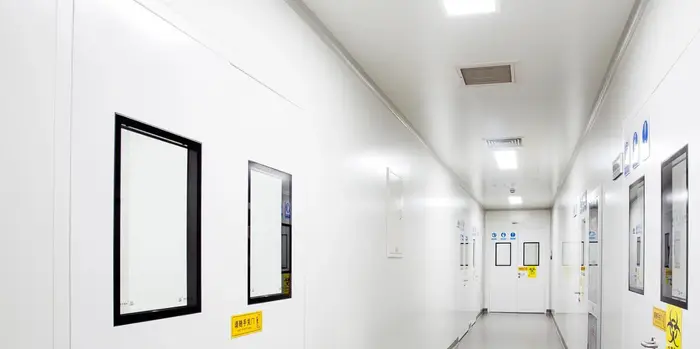
Detailed coordination should treat the enclosure, airflow, controls, utilities, and process equipment as one system. The selected static pass box must align with structural support, ceiling modules, penetrations, return-air paths, lighting, fire protection, and access panels. Three-dimensional coordination or disciplined overlay drawings can expose clashes before materials reach the site. This is especially valuable in phased projects where new work must be isolated from operating areas and shutdown windows are short.
Procurement should evaluate evidence rather than marketing claims. A qualified pass box design should provide material data, interface drawings, installation tolerances, cleaning compatibility, service requirements, and realistic delivery assumptions. Samples and mock-ups can confirm joint quality, finishes, hardware operation, and access. Commercial comparison should include controls, testing, training, documentation, spares, and site supervision, because omissions in these areas frequently reappear later as change orders or commissioning delays.
Installation quality depends on controlled sequencing. Survey information, datum lines, embedded services, and substrate conditions must be verified before assembly begins. Components should arrive protected, be stored in a clean and dry area, and be inspected before use. Installers need agreed methods for joints, seals, penetrations, and repairs. Progressive cleaning and inspection allow defects to be corrected while they remain accessible instead of being discovered after ceilings, equipment, or finishes conceal the work.
Commissioning should prove that the completed solution performs under defined operating states. The plan may include visual inspection, airflow or pressure measurements, filter integrity testing, environmental stability, recovery checks, alarms, and functional interlocks, depending on scope. Results should be tied to calibrated instruments and approved procedures. A punch list needs clear ownership and closure evidence. Successful testing is not only a handover event; it establishes the baseline used to detect later deterioration.
Controlling Lifecycle Cost and Future Capacity
Lifecycle planning is where cleanroom interlock pass box decisions create lasting value. Filters, seals, fans, sensors, hardware, panels, and controls require different inspection and replacement intervals. Maintenance teams should receive safe access routes, isolation procedures, spare-part references, and troubleshooting information. If service requires opening a critical production zone, the operational cost can exceed the component price. Designing for access reduces downtime and makes preventive work more likely to happen on schedule.
Trend data should support routine management. Pressure, temperature, humidity, particle readings, alarms, energy use, and maintenance history can reveal gradual change before it disrupts production. Alert limits should reflect process risk and normal variation, with a defined investigation and escalation route. Teams should review recurring alarms rather than repeatedly resetting them. Combining environmental trends with production events also helps distinguish a facility issue from an equipment or operating-practice problem.
Energy and operating cost deserve attention without compromising process protection. Fan pressure, air volume, cooling demand, and operating schedules should be reviewed after stable performance is demonstrated. Opportunities may include variable control, pressure reset, efficient motors, lower-resistance components, or setbacks in qualified idle zones. Every change needs documented risk review and follow-up measurement. This evidence-based approach captures savings while preserving the conditions on which product quality and uptime depend.
Future capacity should be planned before the first phase is fixed. Spare electrical and utility capacity, logical control zones, removable panels, capped branches, and documented tie-in points can shorten later work. Expansion plans should explain how dust, contractor access, temporary pressure changes, and commissioning will be separated from production. A small investment in interfaces today can prevent a major shutdown when demand grows, particularly where market timing makes speed as important as construction cost.
The strongest outcome comes from shared responsibility. Owners define process risk and business priorities; designers coordinate performance; suppliers document their systems; installers control workmanship; and commissioning teams verify results independently. Regular design reviews should track open assumptions and decisions to closure. With this discipline, Dynamic Pass Box becomes part of a maintainable operating strategy rather than an isolated purchase, supporting reliable production, controlled lifecycle cost, and practical growth for the facility.