







Vibration Mitigation in Metrology Cleanrooms: Panel Isolation and Floor Design
Learn how panel isolation, floating floors, and structural design control vibration in metrology cleanrooms for accurate nanometer-scale measurement.
Metrology laboratories producing calibration standards and performing nanometer-scale measurements require cleanrooms where vibration levels are controlled to extraordinary precision. Even imperceptible building vibrations from foot traffic, HVAC equipment, or nearby transportation can compromise measurement accuracy. The enclosure system in these facilities must serve as both a particle barrier and a vibration isolation platform, requiring specialized engineering that goes far beyond conventional cleanroom design.
Panel Isolation Strategies for Vibration Control
The clean room laminar flow system in a metrology cleanroom must be decoupled from the building structure to prevent vibration transmission. Wall panels mounted on resilient isolation brackets rather than rigid connections to the building structure create a discontinuity that attenuates structural vibration before it reaches the work zone. The cleanroom wall panel design approach for these facilities incorporates mass-loaded panel constructions that add inertia to resist vibration-induced motion. The clean room ceiling suspension system uses spring or air isolators at each attachment point, creating a fully floated ceiling plane that does not transmit building vibration to the HEPA filters and laminar flow distribution grid below. This isolation approach must be carefully balanced against the need for ceiling structural integrity to support filter and fan unit weights while maintaining precise leveling for uniform airflow distribution.
Floor Design and Equipment Support
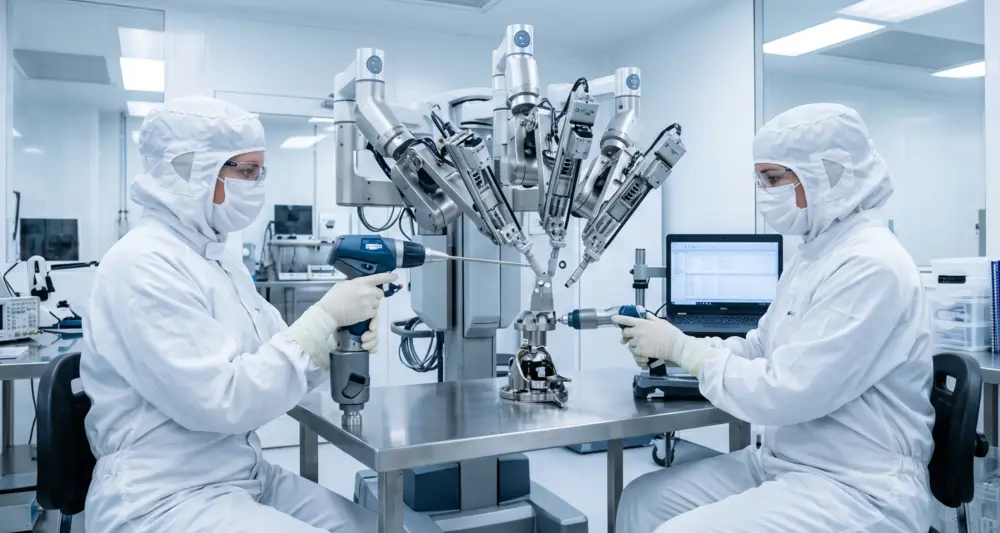
The floor system in a metrology cleanroom is equally critical to vibration performance. laminar flow hood design positioned above measurement equipment must not introduce vibration through airflow turbulence or mechanical fan operation. The selection of fan motors, bearing types, and mounting methods for laminar flow hoods serving metrology zones requires vibration characterization testing to confirm compliance with the facility's vibration criteria. clean room aluminum manufacturer who supply aluminum framework for these facilities must provide profiles with exceptional dimensional stability and damping characteristics that do not resonate at frequencies present in the building environment. The cleanroom environment within the cleanroom must maintain not only temperature and particle control but also humidity stability, as moisture variations can affect both measurement equipment performance and the dimensional stability of the enclosure system itself.
Characterization and Ongoing Verification
Vibration performance in metrology cleanrooms must be characterized during commissioning using sensitive accelerometers and spectrum analysis to identify any problematic frequency components. Ongoing monitoring with permanent vibration sensors provides trend data that can reveal degradation of isolation systems before measurement quality is affected. The most successful metrology facilities establish vibration performance specifications for every component in the enclosure system, from panel brackets to ceiling isolators, ensuring that the complete assembly performs as an integrated vibration control platform.